
01
Identify the tree and its growing environment
Write down the botanical name before applying a general care tip. Tropical ficus, succulent jade and temperate juniper differ in temperature, moisture and seasonal needs. A shallow pot does not make their needs identical.
Check whether your tree belongs indoors or outdoors, then inspect the actual growing position. Light at the leaves, drainage at the roots and protection from extremes are more useful observations than whether the tree looks attractive in the room.
02
Make watering a decision
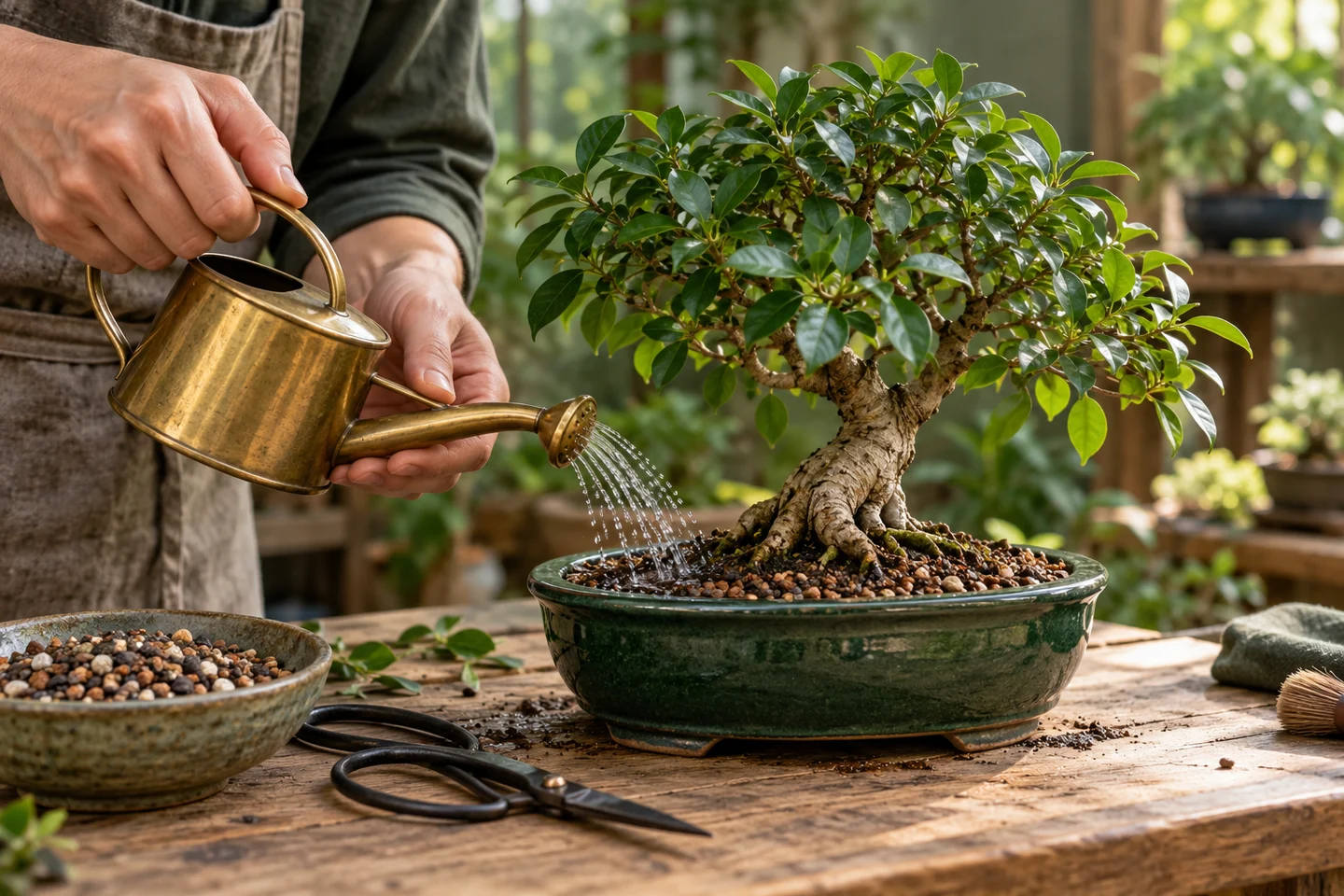
Check moisture regularly and water the full root ball when it needs it. A fine rose helps wet the surface without washing material out of the pot. Let excess drain away. Do not leave a tree standing in runoff or water it by habit simply because the top dressing looks pale.
Different media can look dry while remaining moist below. Learn the pot’s weight and inspect beneath decorative surface layers. Use the detailed watering guide to build a repeatable checking method.
03
Treat light as an essential input
New shoots, leaf spacing and seasonal growth help show whether the tree has enough light. More fertilizer cannot replace missing light. A move to stronger exposure should be gradual, particularly after indoor or shaded growing.
Match the conditions to the species. Outdoor conifers and deciduous trees need an outdoor routine; suitable tropical and succulent subjects can grow indoors where there is sufficient light and warmth.
04
Keep the root environment functional
The growing medium must retain usable moisture while allowing excess water to leave and air to return. Pot holes, particle breakdown, root congestion and how you water all influence that balance. There is no single mix ratio that fits every tree and climate.
Inspect changes over time. Water taking much longer to penetrate, a pot drying unusually fast or a dense mat of roots may justify a closer look before the next suitable repotting window.
05
Separate maintenance from major operations
Small pruning cuts maintain shape. Structural pruning changes the branch framework. Repotting changes the root environment. Wiring repositions branches. These are different jobs, and a weak tree should not receive all of them at once.
Before any major task, identify the goal, suitable timing, tools and recovery conditions. If you cannot explain the benefit to the tree’s future development, it may be better to observe and wait.
06
Feed growth and keep a useful record
Fertilizer supplies nutrients; it is not a medicine for every yellow leaf. Feed according to the product label, species and active growth, and avoid stacking several products because each sounds beneficial.
Keep dated photographs, moisture notes and records of substantial work. When a problem appears, this history helps you identify what changed. Care becomes easier when the routine responds to the tree rather than a rigid calendar.