01
Choose the growing space before the tree
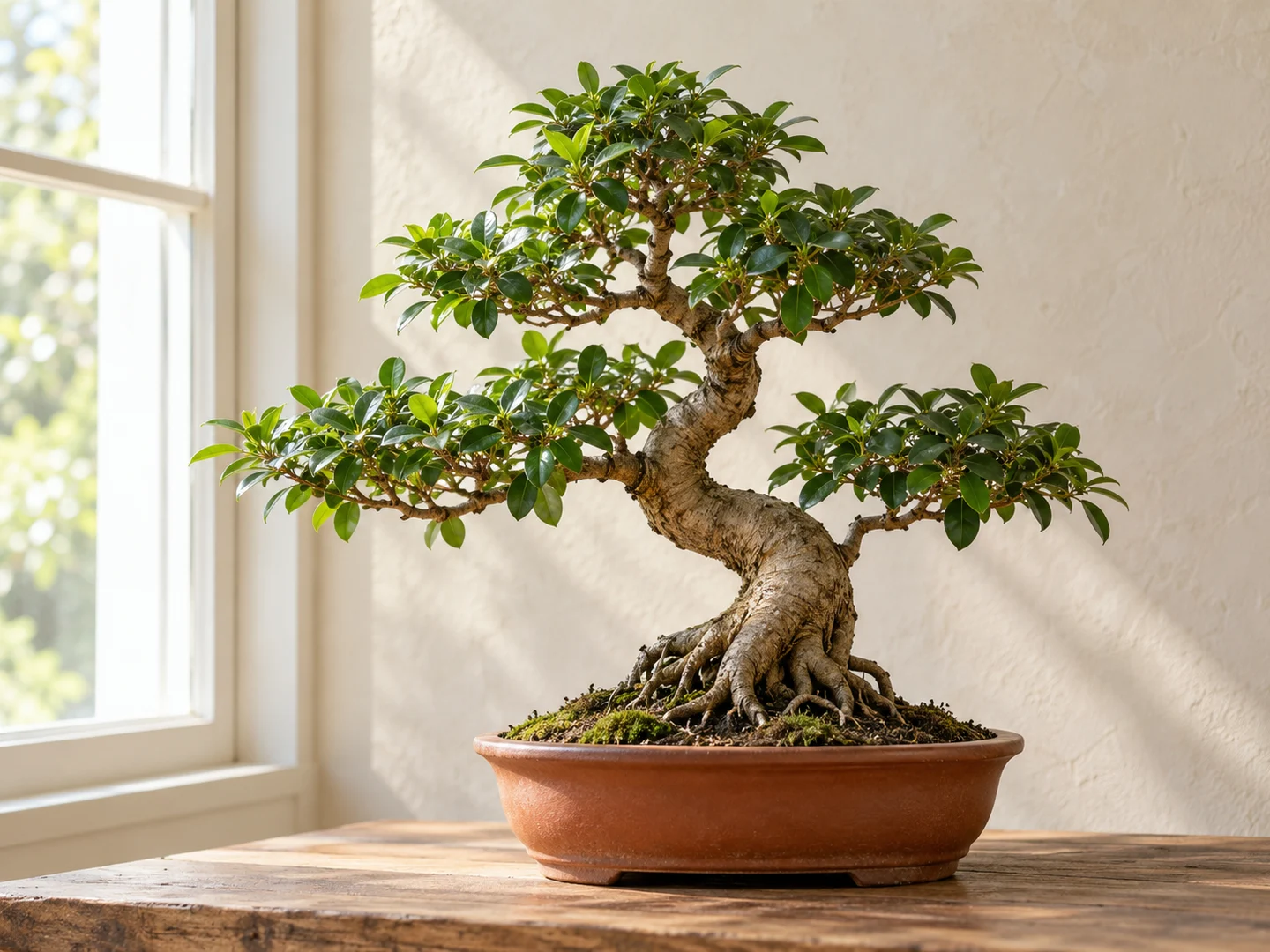
Look at the place where the tree will actually live. A sunny outdoor bench and a bright indoor window offer different conditions. Junipers, pines and Japanese maples are outdoor trees; their seasonal growth cannot be replaced by a few hours on a coffee table. Ficus can be a more practical indoor starting point when you have good light and stable warmth.
If the room is dim throughout the day, buying a supposedly easy tree will not solve the light problem. Improve the growing position first, or investigate a suitable grow light. Our indoor bonsai guide explains what an indoor position needs.
02
Buy an identifiable, healthy starter tree
Ask for a botanical name and a care history. Look for firm growth, healthy foliage appropriate to the season, and a root ball that is secure without sitting in stagnant water. Check leaf undersides and branch junctions for pests. A tree offered in a sealed decorative container or beneath glued gravel deserves extra questions.
A young nursery tree or an established starter bonsai gives you a living plant to learn from immediately. A seed kit is a propagation project: it can be enjoyable, but it is not a shortcut to the mature tree shown on the box.
03
Your first week: observe before changing
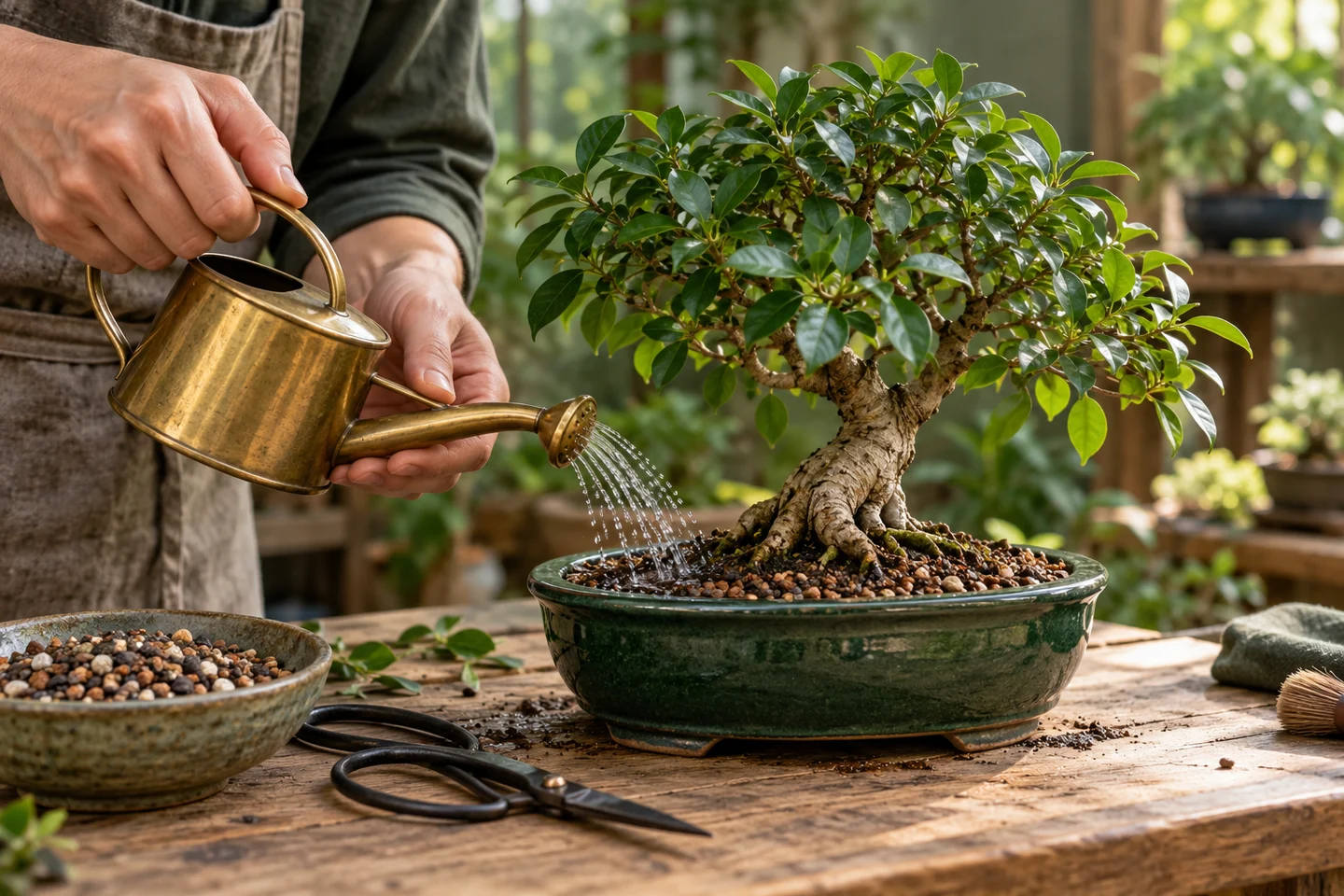
Choose one suitable position and resist moving the tree around the house for display. Check moisture with your fingers and, where helpful, a plain wooden chopstick. Lift the pot carefully to learn how it feels before and after watering. When the root zone needs water, wet it thoroughly and let excess drain away.
Keep a short note of the species, position and soil condition. Photograph the tree from the same angle. Do not combine a new home, a major haircut and root pruning in the first few days. A recently purchased tree benefits from stability while you learn its needs.
04
Start with a small, useful toolkit
A watering can with a gentle rose, clean pruning scissors, a chopstick and a way to keep records cover many early tasks. Buy specialist cutters, wire and repotting supplies when you have a clear job for them. A large case of tools cannot compensate for unsuitable light or uncertain watering.
If you choose a kit, check that it contains a named living tree and relevant care information. Compare the practical contents using the starter kit buying guide.
05
Build a routine around checks, not calendar promises
A useful routine says “check the tree” rather than “water every Friday.” Weather, leaf area, pot depth, substrate and indoor heating all affect how quickly the root zone dries. Growing trees also need feeding, but fertilizer cannot repair a placement problem or revive dead roots.
Leave advanced styling until you can explain why the tree is growing well. Small maintenance cuts are easier to learn and correct than a dramatic redesign. Read the species profile before deciding when to prune or repot.
06
A sensible first learning plan
First, learn to recognise your tree and distinguish normal seasonal change from stress. Next, practise checking moisture and watering evenly. Then watch how new shoots develop and learn the difference between maintenance pruning and structural work. Keep photographs and notes so that your decisions are based on your own tree rather than a generic schedule.
Bonsai rewards attention more than urgency. A plain, healthy starter tree is a better learning partner than an impressive specimen whose conditions you cannot provide.