01
Choose for your growing conditions
Consider the species, pot depth, outdoor exposure and how often you can check moisture. A very open mix may suit one routine and dry too quickly for another. More organic material can alter retention, but fine compacted material can reduce aeration.
Choose a practical starting point and observe it. The best mix is one whose behaviour you understand and can manage reliably.
02
Read ingredients and particle grades
Look for named components and a meaningful particle range. Pumice, lava, akadama, bark and other components contribute different properties. Grades, dust content and breakdown vary by supplier.
Check whether the product is a ready-to-use mix or a single ingredient. A bag of one mineral is not automatically a complete medium for every tree.
03
Check species-specific requirements
Acid-loving azaleas need an appropriate root environment. Succulent subjects require a different moisture balance from many leafy trees. Conifer repotting also has its own handling considerations.
Do not replace every tree’s medium simply to standardise the collection. Group similar needs where practical, but retain the differences that matter.
04
Compare usable volume and delivery
Weight can mislead when comparing a light porous ingredient with a dense mineral. Read the declared volume, grading, delivery cost and storage requirements.
A large bag may be economical only if you can keep it clean and dry. Buying a small amount for a planned repot can be more sensible than storing several unfamiliar materials indefinitely.
05
Plan the repot before opening the bag
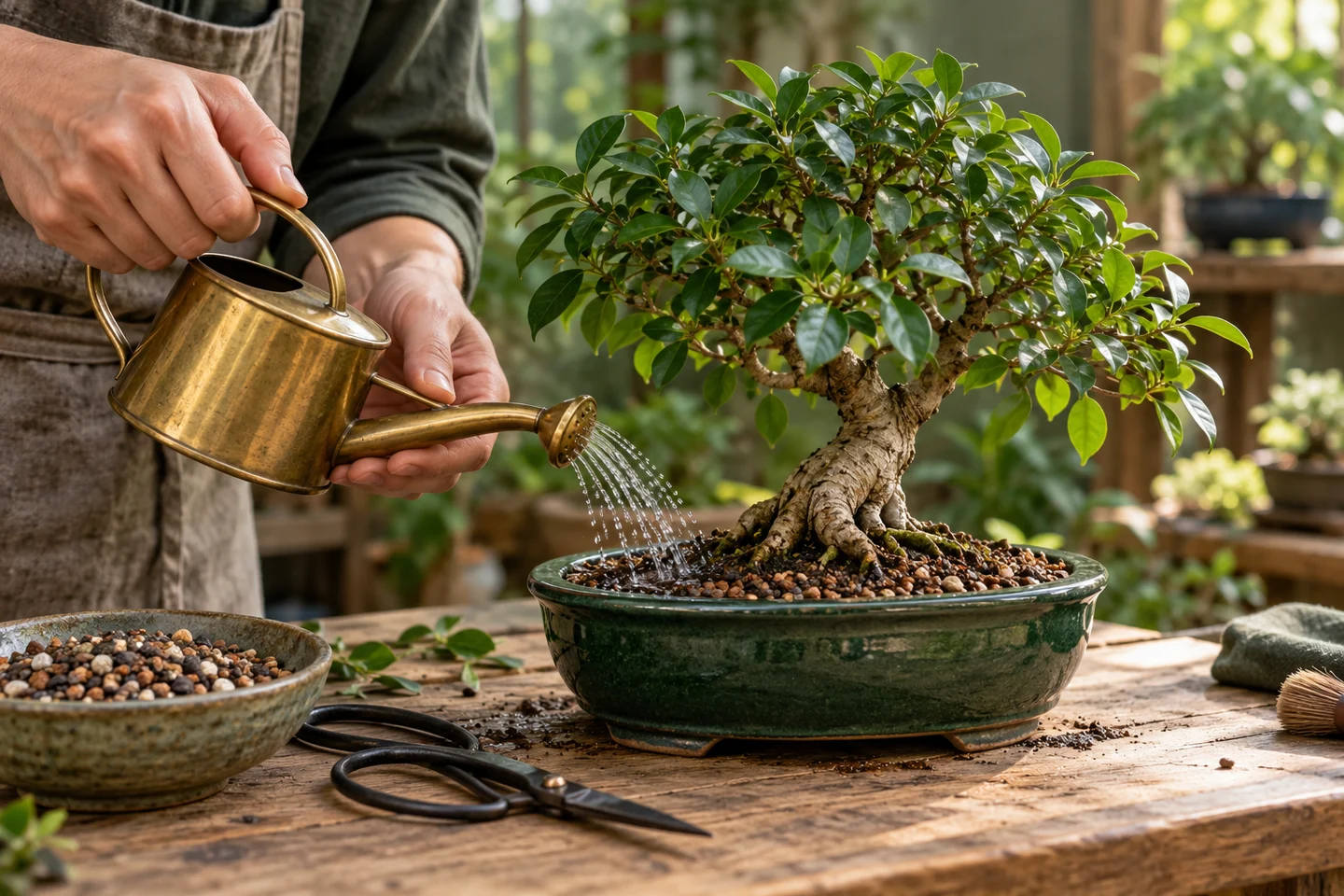
Have the pot, tools and recovery conditions ready. Choose timing for the species and inspect the roots before deciding how much old material to remove.
A new medium is not a reason for automatic emergency root work on a weak tree. Read bonsai soil explained and the repotting guide before making the change.