01
Look for a reason to repot
A congested root ball, deteriorating medium, poor water penetration or unsuitable nursery compost may justify work. A tree dropping a few leaves does not by itself prove that repotting is the answer. Diagnose the problem first.
Growth rate, pot size and development stage affect the interval. Young vigorous trees and mature refined trees do not need an identical schedule.
02
Choose timing by species and condition
Many temperate trees are repotted near the start of active growth, while tropical species need suitable warmth and recovery conditions. Flowering and conifer species can require more specific plans. A calendar date copied from a different climate may be misleading.
If the tree is weak, the decision becomes more delicate. Seek experienced help for a valuable tree or suspected serious root failure rather than combining emergency work with an ambitious styling session.
03
Prepare everything before exposing roots
Set out the appropriate container, drainage mesh if needed, securing wire, fresh medium, chopsticks and clean tools. Confirm that the pot drains and that you can anchor the tree without crushing the trunk or roots.
Have a suitable sheltered recovery place ready. Keep exposed roots protected from drying sun and wind while you work.
04
Inspect and reduce roots carefully
Check for securing wires before removing the tree. Loosen the outer medium gently and inspect the roots. Remove dead or damaged material with clean tools and keep root reduction proportionate to the species and vigour.
Do not bare-root every tree or remove a fixed percentage as a universal rule. Conifers in particular require a species-specific approach. The aim is to support an effective root system, not to create a tidy photograph.
05
Secure, refill and water evenly
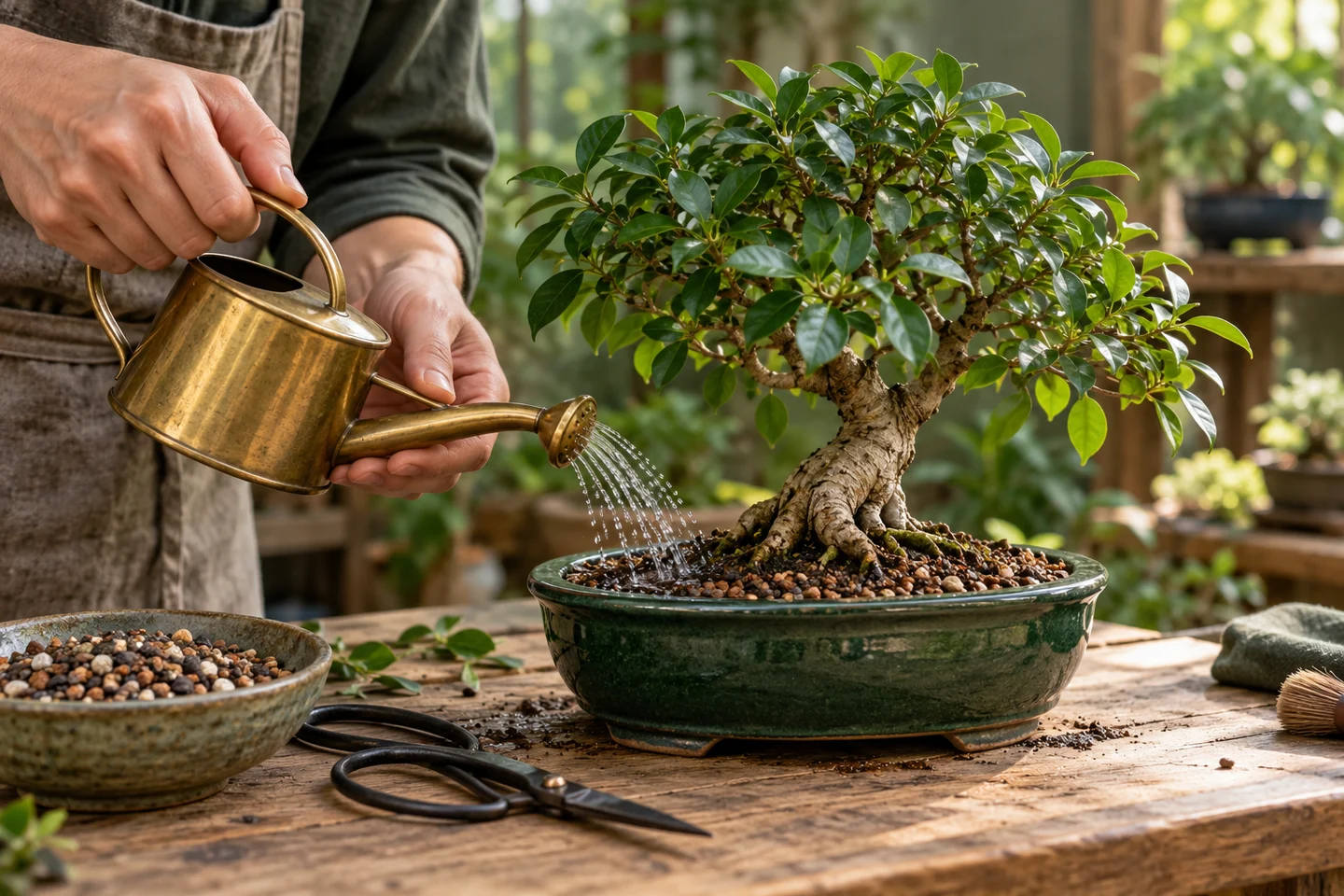
Position the tree, secure it appropriately and work fresh medium gently into spaces around the roots. Avoid leaving large voids, but do not compress a granular mix into a dense mass. Check that the trunk is stable.
Water thoroughly and allow drainage. Record the date, substrate and extent of root work so you can judge the recovery and plan the next inspection.
06
Give the tree time to recover
Protect it from unsuitable wind, harsh exposure or cold while maintaining conditions appropriate to the species. Continue moisture checks; a reduced root system and changing weather can alter the drying pattern.
Avoid immediately adding heavy pruning, aggressive wiring or strong feeding. Follow the tree’s recovery and product instructions rather than a promise that every repotted tree is ready for normal work after the same number of days.