01
Separate growing space from display space
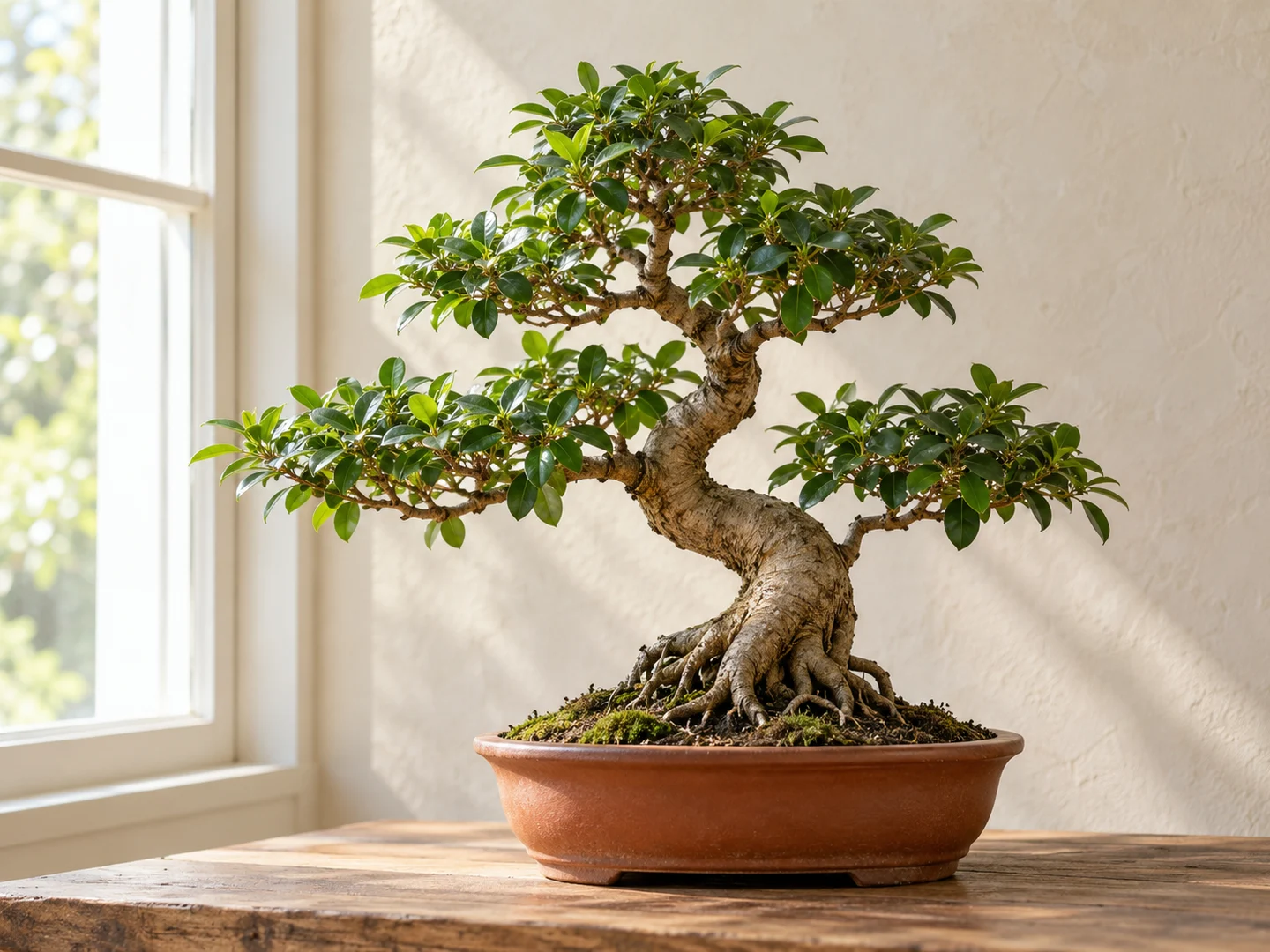
A side table can be a beautiful place to admire a tree without being a good place to grow it. Distance from a window reduces indoor light, while curtains and outside obstructions change the exposure further. Observe the position over a full day.
For outdoor trees, assess sun, wind and reflected heat from walls or paving. The conditions around a small pot can be harsher than the wider garden suggests.
02
Choose indoor plants for indoor conditions
Ficus can suit a bright warm window, while dwarf jade generally needs very bright light and a drier root-zone rhythm. Neither should be expected to flourish indefinitely in a dark corner.
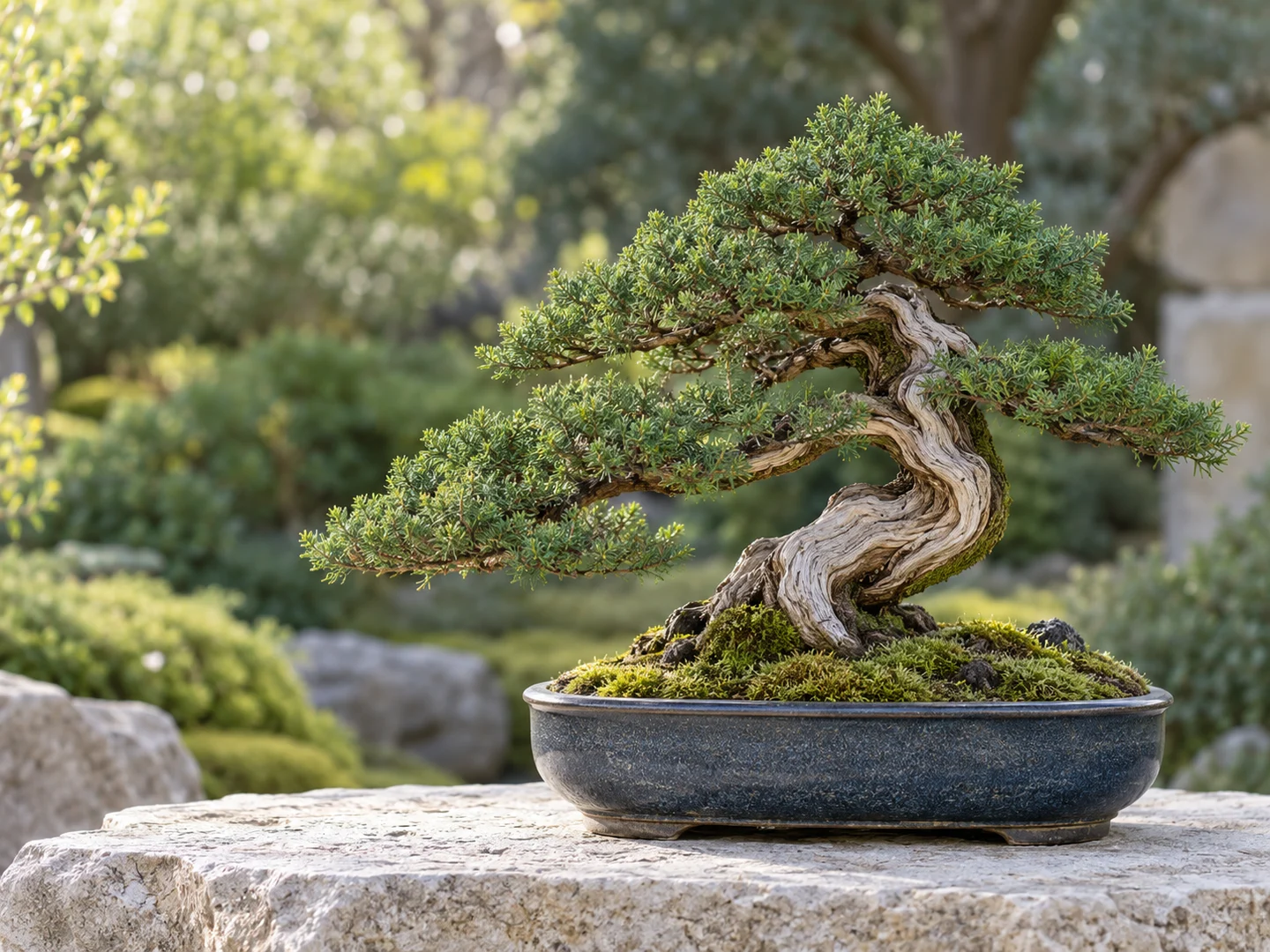
Juniper, pine and maple need outdoor seasonal conditions. A bright indoor window is not a substitute for their outdoor growing cycle. Choose the species after assessing the space, not after choosing a favourite silhouette.
03
Change exposure gradually
Leaves grown in shade are not automatically ready for intense direct sun. Introduce stronger exposure in stages while watching leaf response and moisture demand. The same caution applies when a tree moves from indoors to a warm outdoor season.
Acclimatisation is also about wind and temperature. A sudden combination of sun, dry air and a windy bench can stress a tree even when each condition seems reasonable in isolation.
04
Recognise useful growth signals
Long weak shoots, widely spaced leaves and leaning growth can suggest inadequate light, but symptoms need context. Pests, root problems and seasonal rest can also reduce vigour. Compare new growth with the known habit of the species.
Leaf scorch after a move can indicate that the transition was too abrupt. Do not respond by moving the tree between several extremes each day; choose a suitable sheltered recovery position and review the cause.
05
Evaluate grow lights by coverage
A plant light needs to illuminate the canopy at an appropriate working distance. Consider coverage, output information, mounting, heat, glare, electrical safety and a timer. A bright-looking bulb aimed from across the room may deliver little useful light to the leaves.
A lamp can supplement suitable indoor growing. It does not remove the outdoor seasonal needs of temperate species. See the grow light buying guide before choosing equipment.
06
Reassess as the seasons change
The same window or bench changes through the year. Sun angle, nearby foliage, indoor heating and day length all affect the tree. Keep a brief record of placement and growth so you can recognise a pattern.
Where practical, organise trees by compatible light and watering needs. That makes daily care easier than arranging every pot only for its appearance.