01
Know which ficus you have
Ficus is a large genus. This guide focuses on Ficus microcarpa, a common bonsai subject, including trees sold with swollen “ginseng” roots. Ficus benjamina is a different species and can respond differently to disturbance. A sales label saying only “bonsai” is not enough to identify a plant.
Look for small, glossy, oval leaves and woody branching, then compare the label and growth with a reliable plant reference. Some nursery forms are grafted; a change in leaf shape on a strong shoot can indicate growth below the graft.
02
Give light and warmth priority
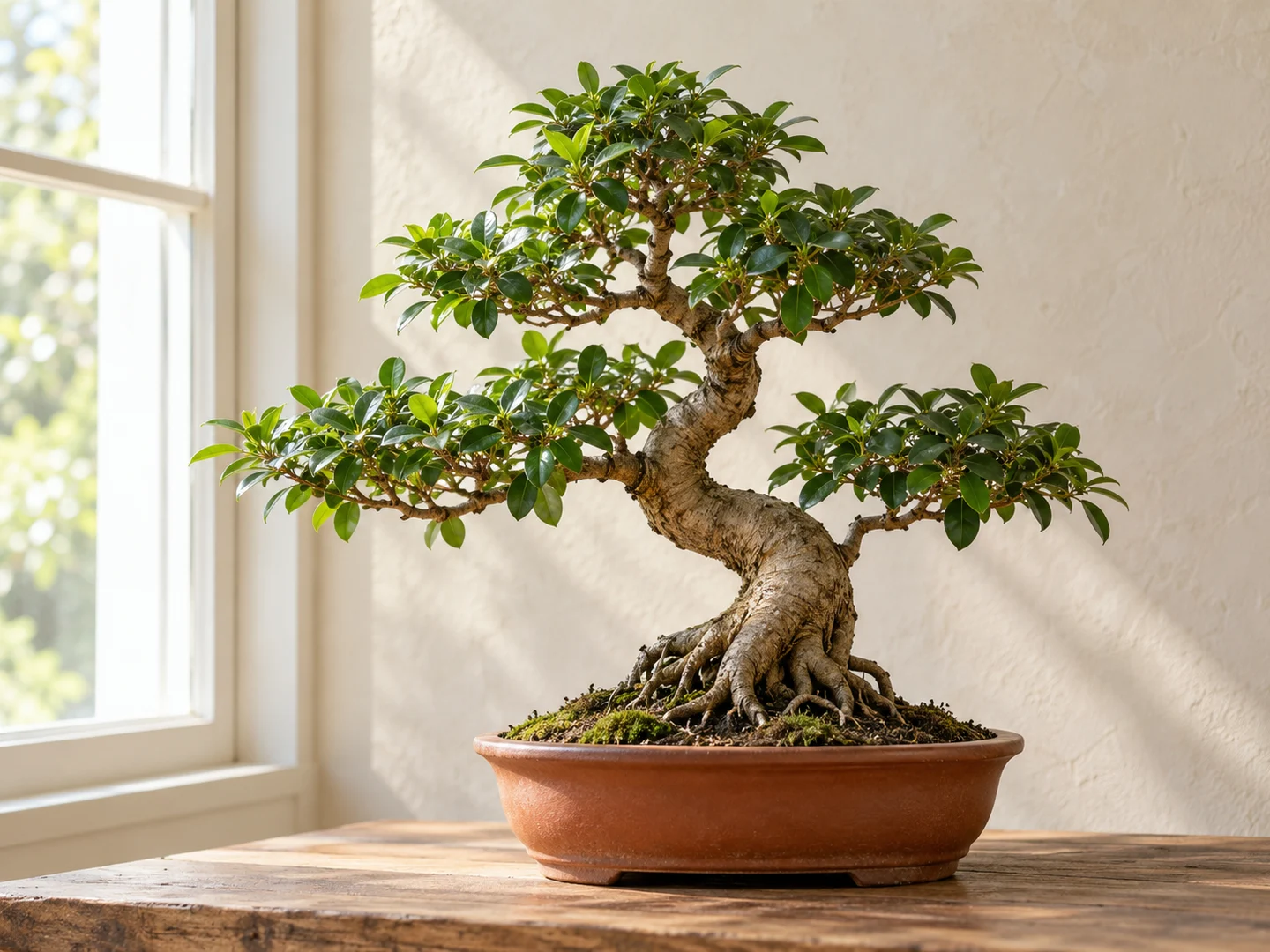
Place the tree close to a bright window, away from cold draughts and hot air blowing from a radiator. Increase strong sun exposure gradually if it has been grown in shade. A ficus may keep its leaves for a while in a dim room without making healthy new growth; survival is not the same as a good growing position.
Outdoor summer time can help in suitable warm conditions, but acclimatise it and bring it back before temperatures become too cool. Do not copy winter routines designed for temperate outdoor bonsai.
03
Water the root ball, then allow drainage
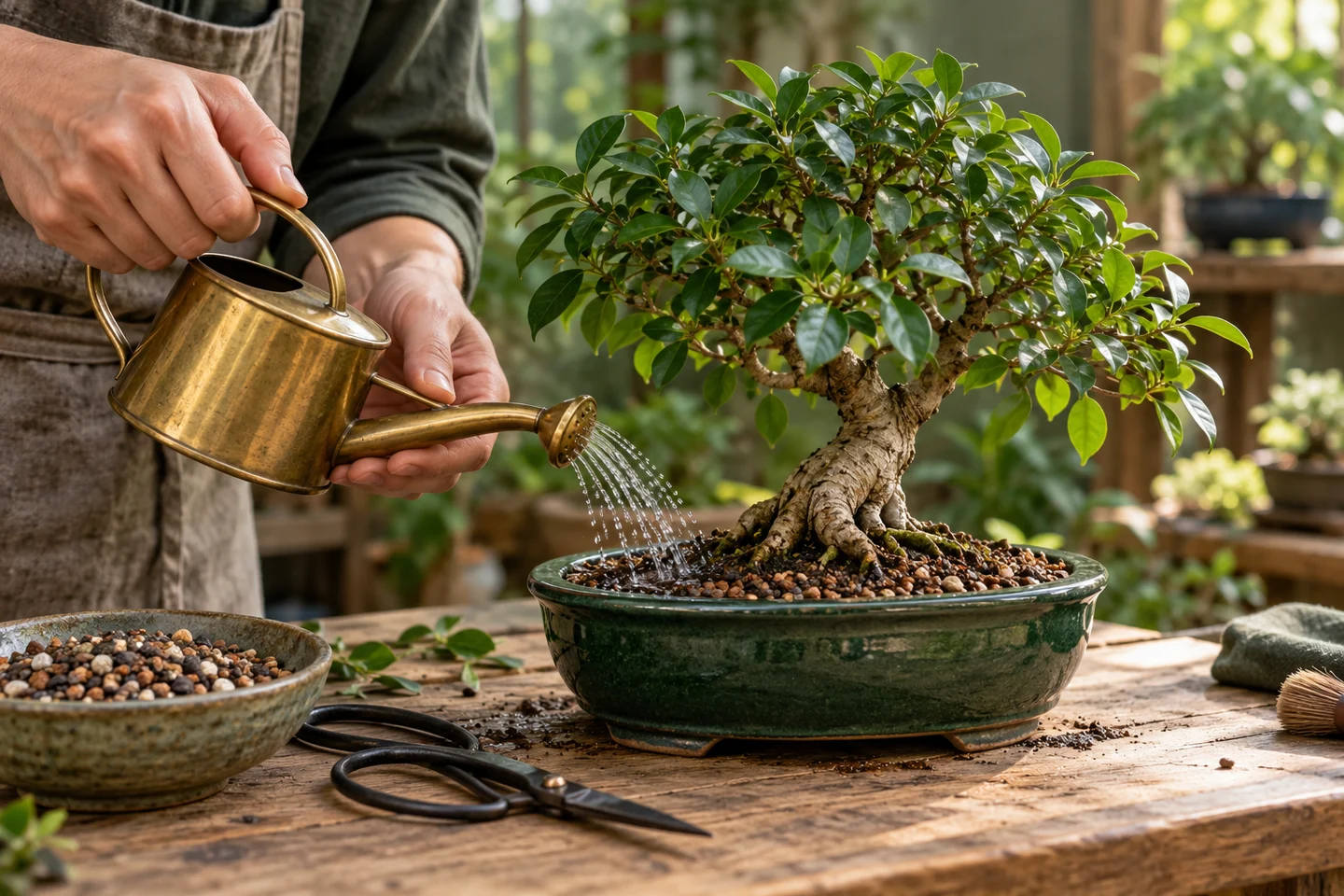
Check the substrate rather than judging from shiny leaves alone. Water evenly when the upper medium is starting to dry and the root ball needs moisture, then let the pot drain. Do not leave the base standing in a full saucer or an undrained outer pot.
A light, airy mix and a warm, leafy tree may dry faster than dense nursery compost. Learn the pattern of your own pot. If the surface stays wet for a long time, investigate the light, drainage and roots before adding more water.
04
Prune healthy growth with a plan
Allow a well-established tree to produce new shoots before trimming them to maintain its outline. Keep useful inner growth and choose cuts that leave a direction for the next shoot. Major reductions should be planned around strong growth and recovery conditions.
Ficus produces a milky latex when cut. Avoid skin and eye contact and keep cut material away from children and pets. Use clean tools and do not strip a weak tree simply to make its outline neater.
05
Repot because the roots need it
Declining drainage, a congested root ball or deteriorated substrate are reasons to inspect a repotting plan. Warm active growth is generally a more useful recovery window for tropical ficus than a cold, low-light period. Keep root work proportionate to the tree’s condition and experience level.
Prepare the pot, securing wire and substrate before disturbing the roots. Afterward, maintain suitable warmth and light while avoiding abrupt harsh exposure. Follow recovery rather than immediately adding another major styling task.
06
Read leaf loss in context
A few older leaves are different from rapid loss across the canopy. Note whether the tree recently moved, became cold, dried out, stayed saturated or lost light. Check for scale insects and mites as well.
Change the most likely underlying problem first. Repeatedly moving, feeding, spraying and repotting a stressed ficus makes the cause harder to identify. Photograph the change and inspect the root-zone conditions before choosing a treatment.