01
Make a short history before treating
Note the species, growing position, season and when symptoms started. Record recent moves, missed checks, feeding, repotting, pruning and weather extremes. Photograph the whole tree and the affected area.
Inspect root-zone moisture, drainage holes and the undersides of leaves. A calm ten-minute check often gives better information than immediately buying a spray.
02
Yellow leaves: inspect the pattern
A few older leaves yellowing inside the canopy can differ from rapid yellowing across the tree. Seasonal leaf change is normal for deciduous species, while a recently moved tropical tree may be adjusting to a new environment.
Check whether the medium is dry, persistently wet or unevenly wetted. Look for pests and changes in light. Do not add water or fertilizer merely because a single leaf is yellow.
03
Browning: distinguish edges, tips and whole branches
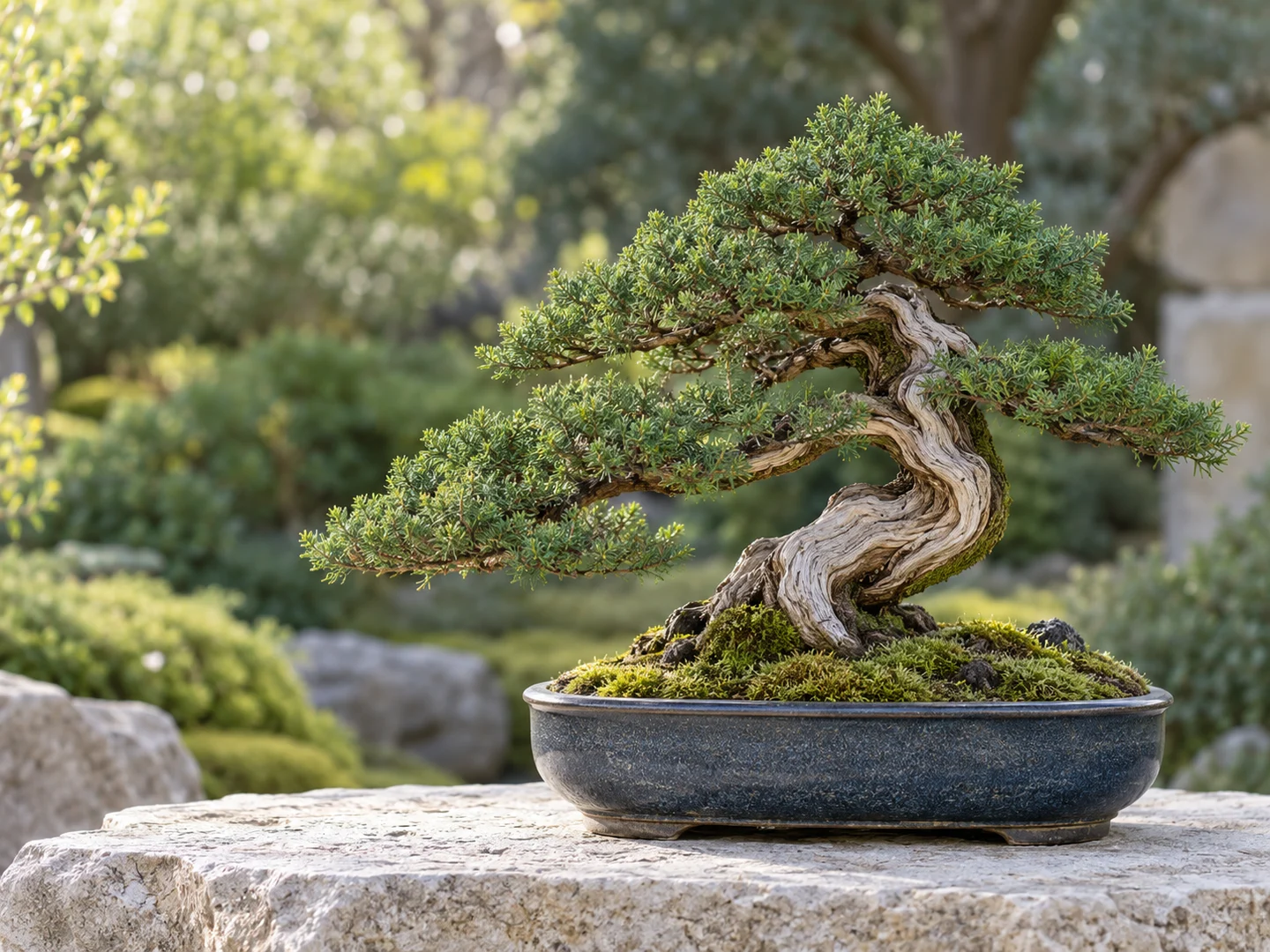
Dry leaf edges after hot wind can suggest exposure or moisture stress. Browning tips or a whole declining conifer branch may have a different history. Juniper damage can become visible after the original stress.
Assess living tissue and current growth carefully. Dead brown foliage will not turn green again because it is misted. The objective is to preserve healthy parts and correct the cause.
04
Leaf drop: check identity and recent moves
Autumn leaf fall on an outdoor maple is different from sudden loss on a warm-grown ficus. A newly purchased tree may have experienced transport, low retail light and a sharp change of position.
Choose an appropriate stable growing space, verify moisture and inspect for pests. Repeatedly relocating or repotting the tree can add stress before the initial problem is understood.
05
Pests: identify before applying a treatment
Look for insects, scale-like coverings, fine webbing, sticky residue or distorted new growth. Isolate an affected plant from nearby trees when practical and identify the pest. Some residue or webbing may have harmless explanations, so inspect closely.
Use only a treatment suitable for the plant and target, following the current label and local requirements. Test sensitivity where appropriate and do not mix products casually.
06
Know when to seek an in-person assessment
Rapid collapse, soft roots, widespread branch death or an uncertain diagnosis on a valuable tree justify help from an experienced grower or plant professional. Bring photographs and the care history.
Avoid a sequence of unplanned interventions. Stabilise suitable light, temperature and drainage while investigating. A living tree needs a cause-based response, not every possible treatment at once.