01
Distinguish training from display
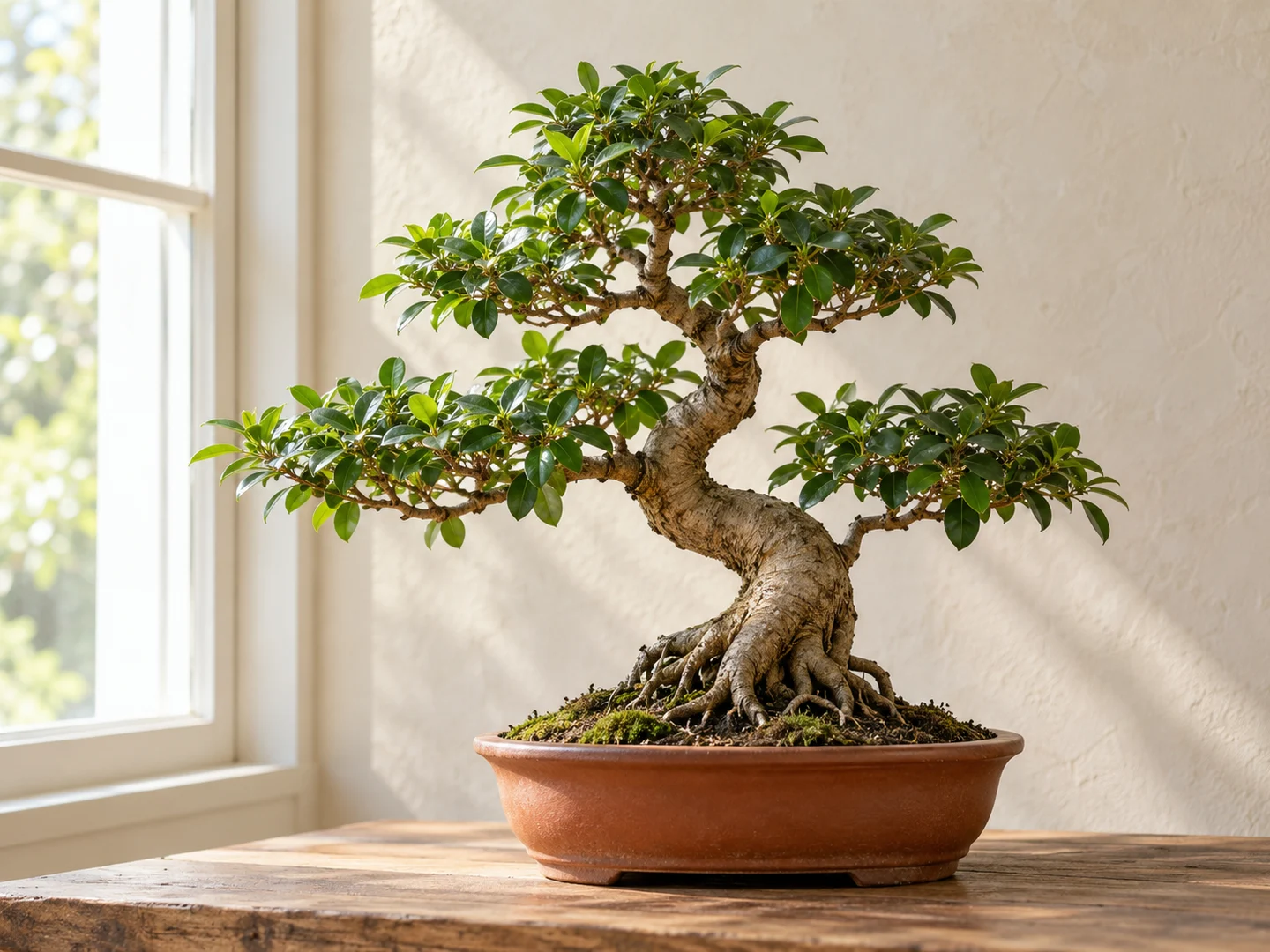
A developing tree may need a practical training container that gives roots and trunk room to progress. A shallow display pot is usually selected for a tree and root system already suited to it.
Do not force a young or weak tree into a miniature pot just to make it look finished. Container choice should support the stage of development.
02
Check drainage and anchoring
Inspect the base for drainage holes and, where needed, separate securing holes. A pot described as a bonsai planter may be a decorative outer container without adequate drainage. Read the dimensions and base photographs.
Make sure the tree can be secured safely and runoff can leave freely on the bench. Feet should support the pot without blocking its holes.
03
Read internal dimensions
External width is not the same as usable root space. Wall thickness, inward-curving rims and depth affect how the root ball fits and how easily it can be removed later.
Measure the existing root ball and consider the planned root work. Size conventions can help with display proportions, but they should not override root health.
04
Compare material and exposure
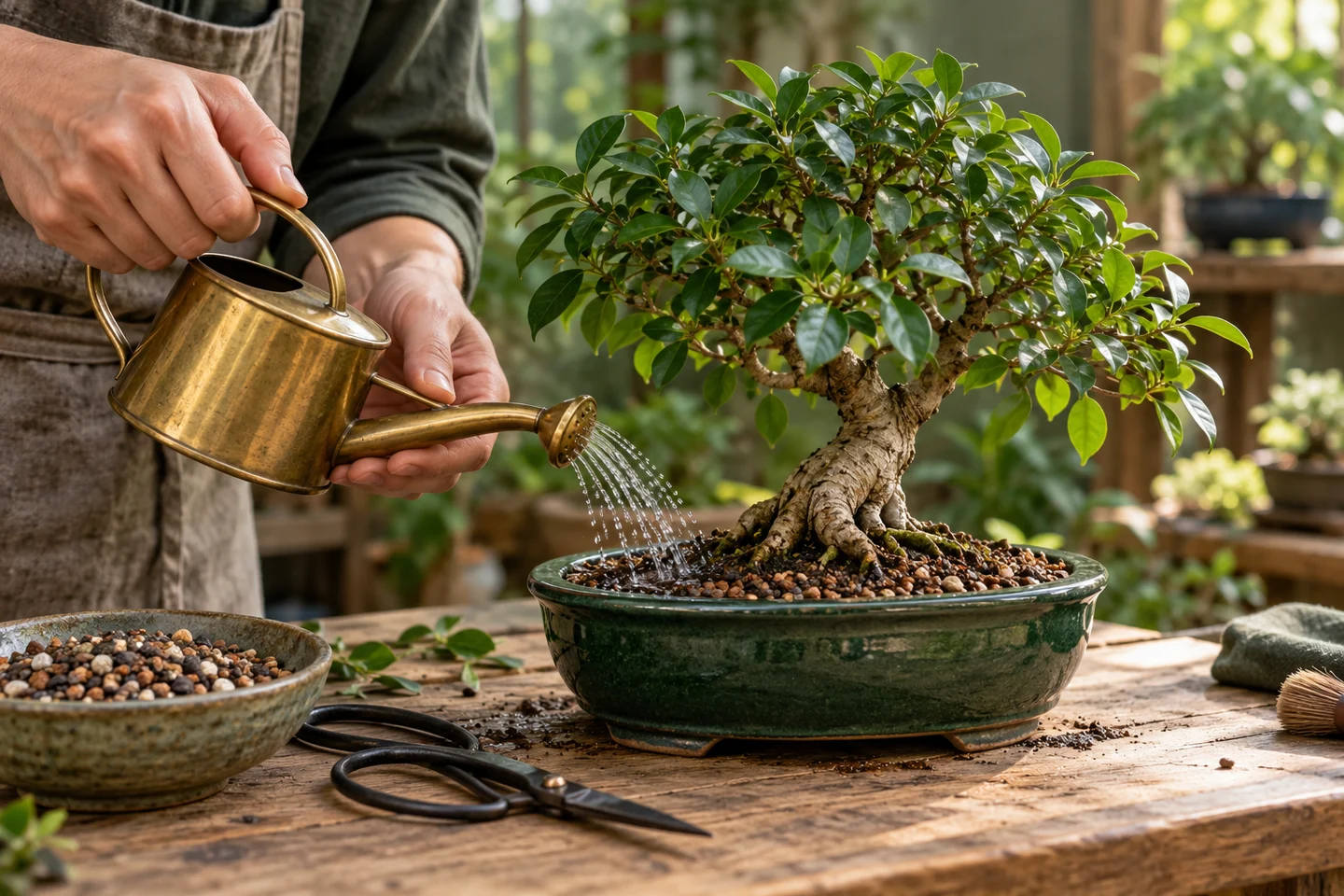
Ceramic, plastic and other training containers differ in weight, durability, appearance and handling. Frost resistance is a manufacturer claim to check, not an assumption based on a photograph.
A light container may need securing in wind. A heavy pot may be difficult to move safely. Consider who will handle the wet tree and where it will be kept through the year.
05
Choose the visual relationship last
Pot colour, surface and outline can echo or balance the trunk and foliage. Glazed pots often feature in broadleaf and flowering displays, while unglazed finishes are common with conifers, but design is not a health rule.
Before ordering, check return conditions for fragile ceramics and photograph damage on arrival. A beautiful intact pot that fits the roots is more useful than an ideal-looking size that cannot be managed safely.