01
Dwarf jade and jade plant are different plants
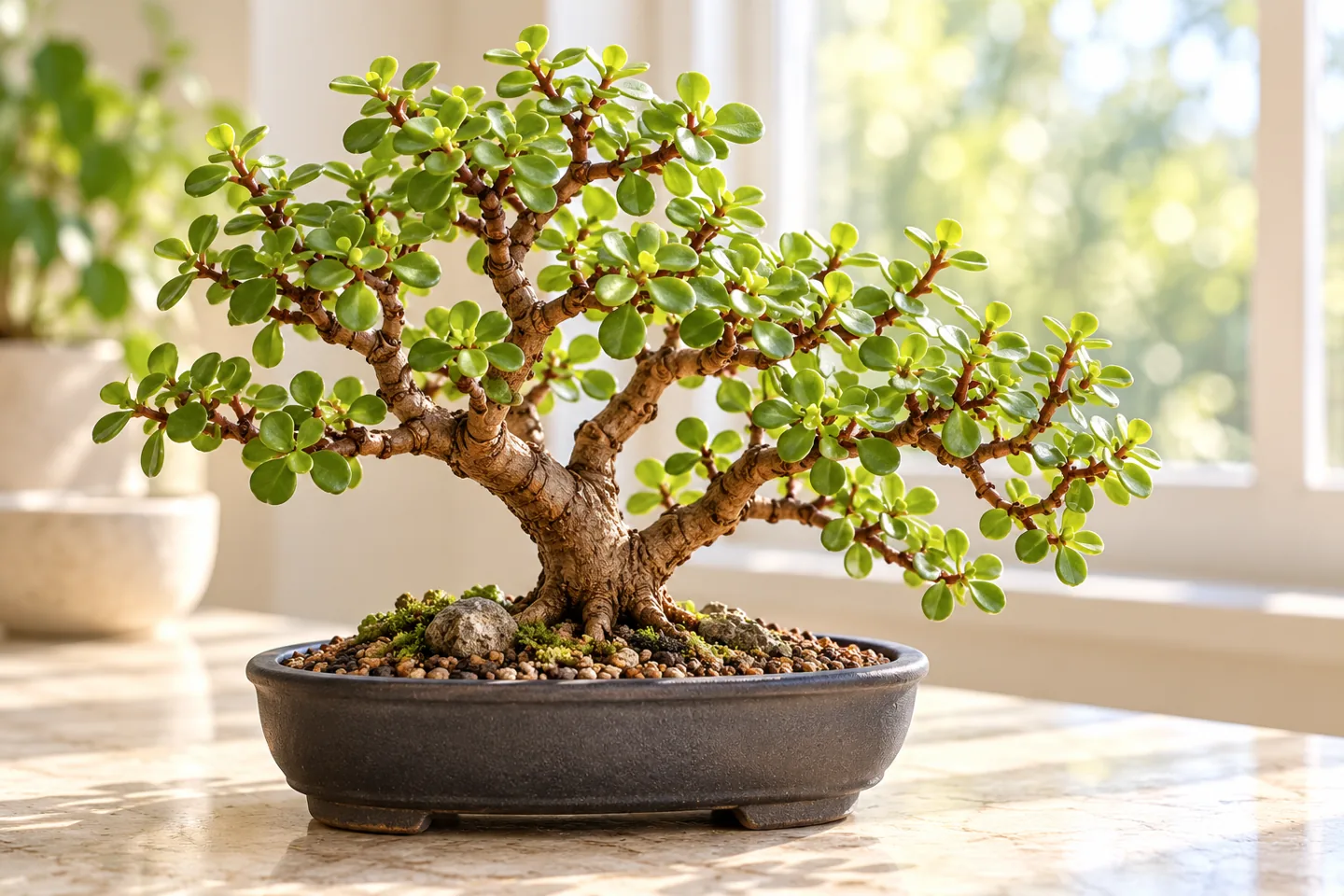
Portulacaria afra is often called dwarf jade or elephant bush. It has small, rounded succulent leaves and frequently reddish young stems. Crassula ovata, commonly called jade plant, usually has larger, thicker leaves. They are not two names for the same species.
Both can be trained into tree-like forms, but leaf size, branch weight and growth habit affect the design. The photographs here illustrate dwarf jade. Check the botanical name before following advice about propagation or pruning.
02
Provide enough light for compact growth
Give jade a very bright growing position. Gradually introduce stronger direct light rather than moving a shaded plant suddenly into intense sun. Long gaps between leaves and leaning shoots suggest that the growing conditions need attention.
Outdoor growing is possible in suitable warm, frost-free conditions. Protect the plant from cold and prolonged wet weather. A sunny spot does not remove the need to assess the temperature and drainage around the roots.
03
Let the medium dry more than for leafy trees
Water the substrate thoroughly when it has dried sufficiently for the particular plant and conditions, then allow complete drainage. Do not keep adding small splashes to an already damp pot. Succulent stems can remain firm while the medium is still too wet below the surface.
In cool, low-light conditions, water use slows. A calendar copied from summer can leave roots wet for too long. Check below the surface, lift the pot carefully and pay attention to how slowly the substrate is drying.
04
Use a pot and mix that release excess water
Drainage holes are essential. A decorative cachepot must not trap runoff around the base. An open, well-drained growing medium is more helpful than a sealed layer of ornamental gravel.
Avoid a very large pot chosen only for appearance; a small root system in a large volume of damp medium can be difficult to manage. Choose a practical training container first and refine the display pot after the plant has an established structure.
05
Shape with careful cuts
Clip-and-grow shaping often suits jade because thick, water-filled branches can snap when forced. Let a healthy plant extend, choose a suitable branch direction and prune to encourage branching. Remove weight gradually instead of bending a heavy stem sharply.
If you use wire, monitor it closely and do not assume the soft bark will tolerate the same handling as a juniper. Clean cuts, a stable plant and an achievable design are more useful than dramatic curves made in one session.
06
Watch for soft stems and persistent dampness
Softening stems, collapsing foliage and medium that stays wet need prompt attention. Do not treat these signs as a request for fertilizer. Check drainage, temperature and root condition.
Keep plants and cuttings away from pets until you have checked species-specific safety information. “Jade” is a common name used loosely in shops, so a safety assumption based on the name alone can be misleading.