01
Bonsai describes a practice, not a species
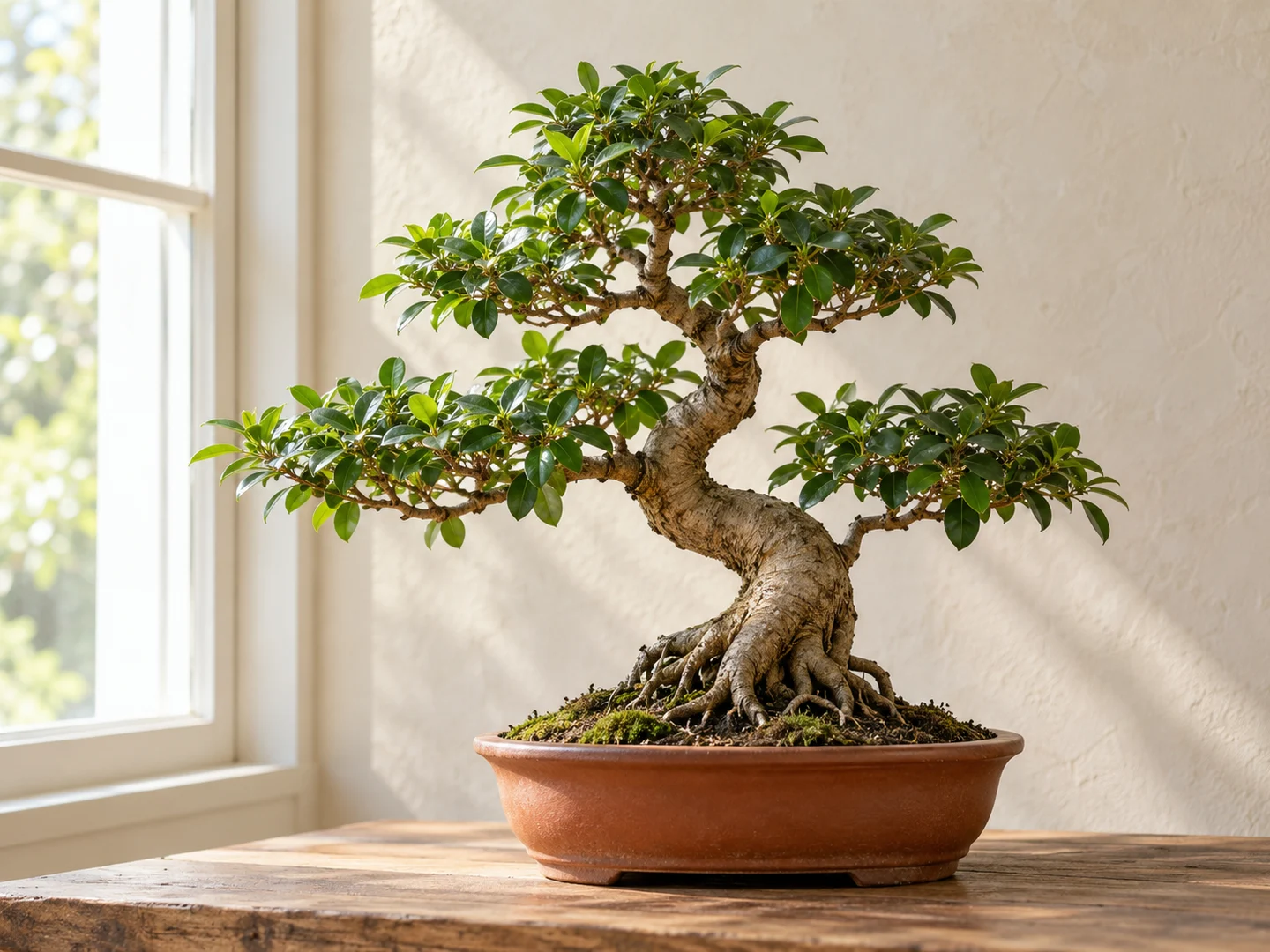
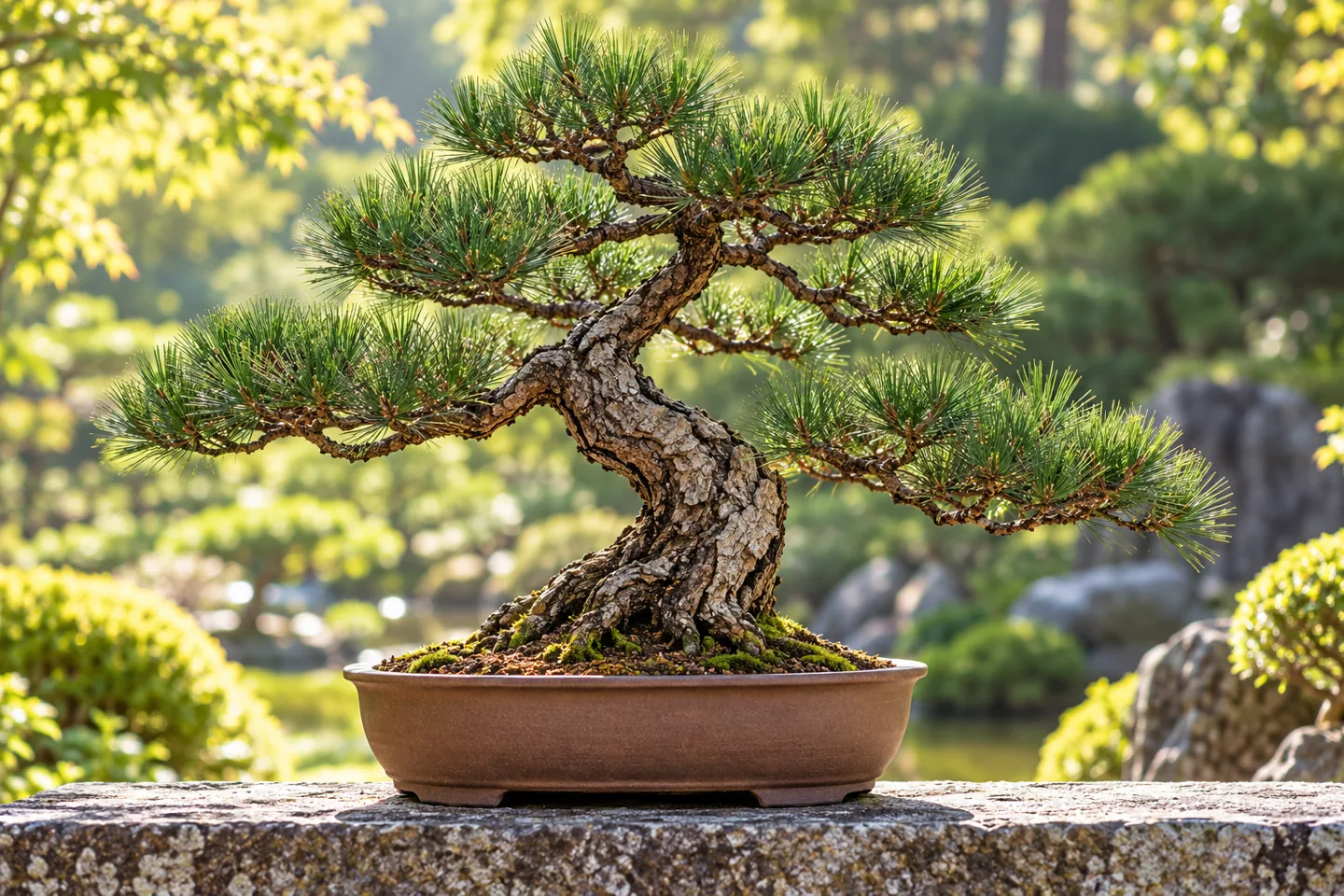
A ficus, elm, juniper or maple can become a bonsai subject. Their leaf shapes, seasonal behaviour and care requirements remain different. The pot and training do not turn them into one kind of plant.
This is why the first care question is always the botanical identity. A generic label that says “bonsai” leaves out information needed for light, temperature, pruning and repotting.
02
Small size comes from cultivation
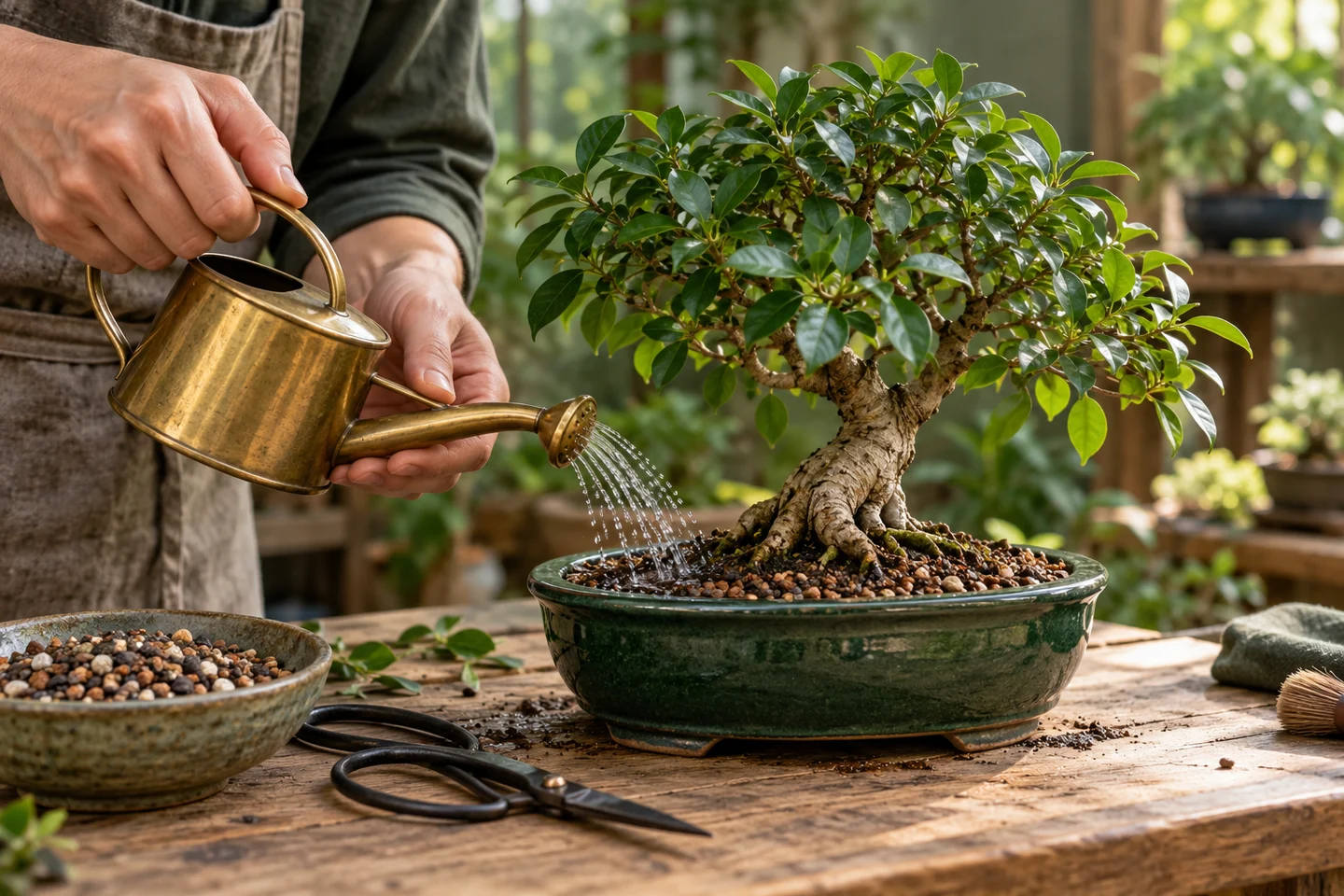
Container growing, pruning, root management and development shape the plant over time. The aim is not simply to keep cutting a tree until it becomes tiny. A convincing bonsai uses trunk character, branching, roots and proportion together.
There is no special seed that instantly produces a finished miniature tree. Seed growing starts a young plant that still needs development.
03
A bonsai is never a finished ornament
Leaves grow and age, branches extend and roots fill the pot. A healthy tree changes through the year, and some species lose their leaves seasonally. Care continues whether or not the tree currently looks ready for display.
Good growing conditions are part of the art. Strong light, appropriate watering and a functional root environment give you living material to shape.
04
Styles are a language for observing trees
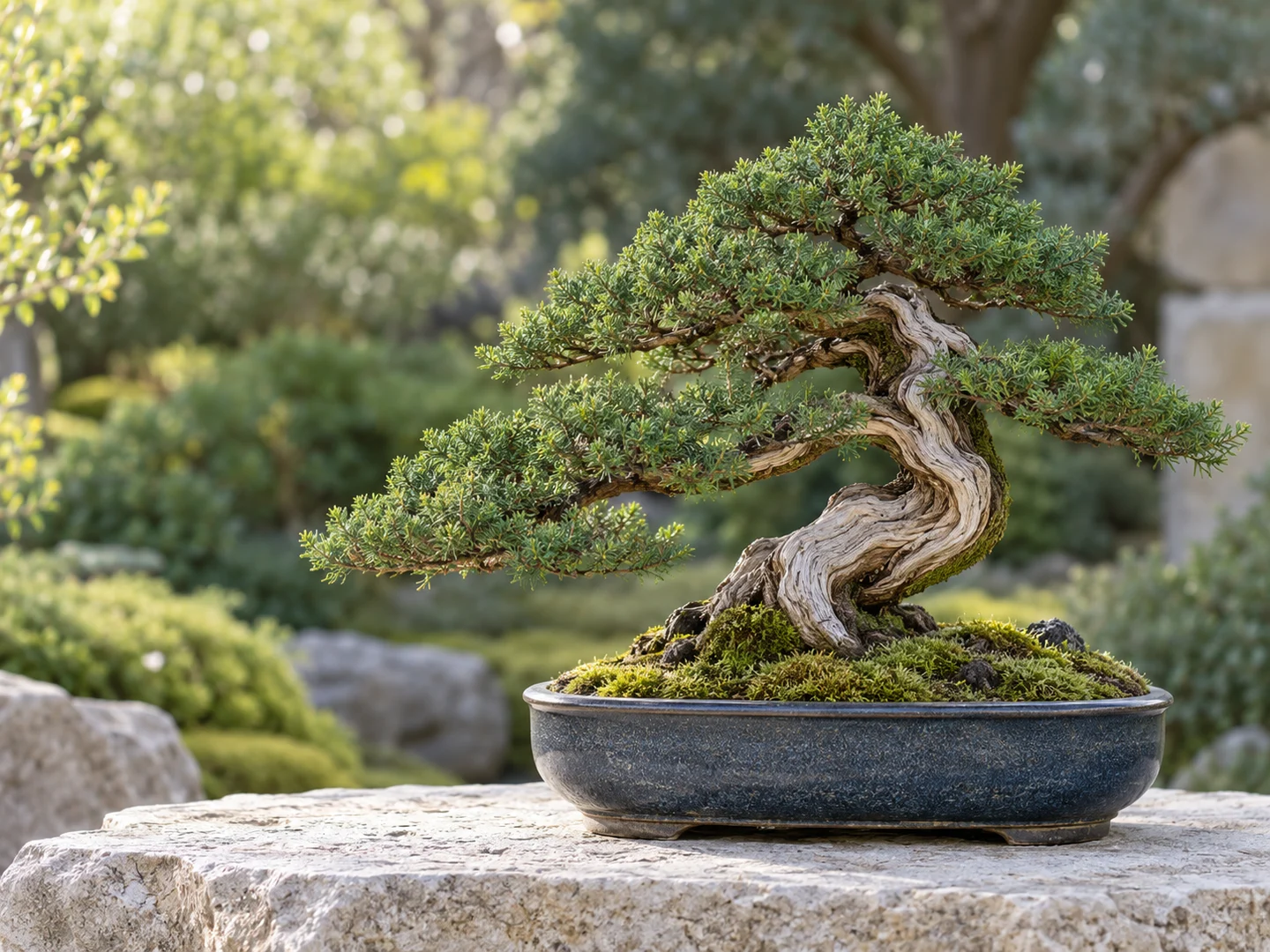
Upright, slanting, cascade, windswept and forest forms describe different relationships between trunk, branches and container. These ideas can help you study a tree without making every subject follow an identical diagram.
Begin with the movement already present in the material. A design becomes more convincing when it works with the tree’s health and growth habits.
05
Start by learning one suitable tree
Choose a species for the space you can provide. Learn its moisture pattern, observe growth and make a few purposeful decisions. That experience is more useful than buying advanced equipment before you understand the plant.
The beginner guide turns the idea into a practical first-tree plan, while the species directory helps compare growing needs.