01
Formal and informal upright
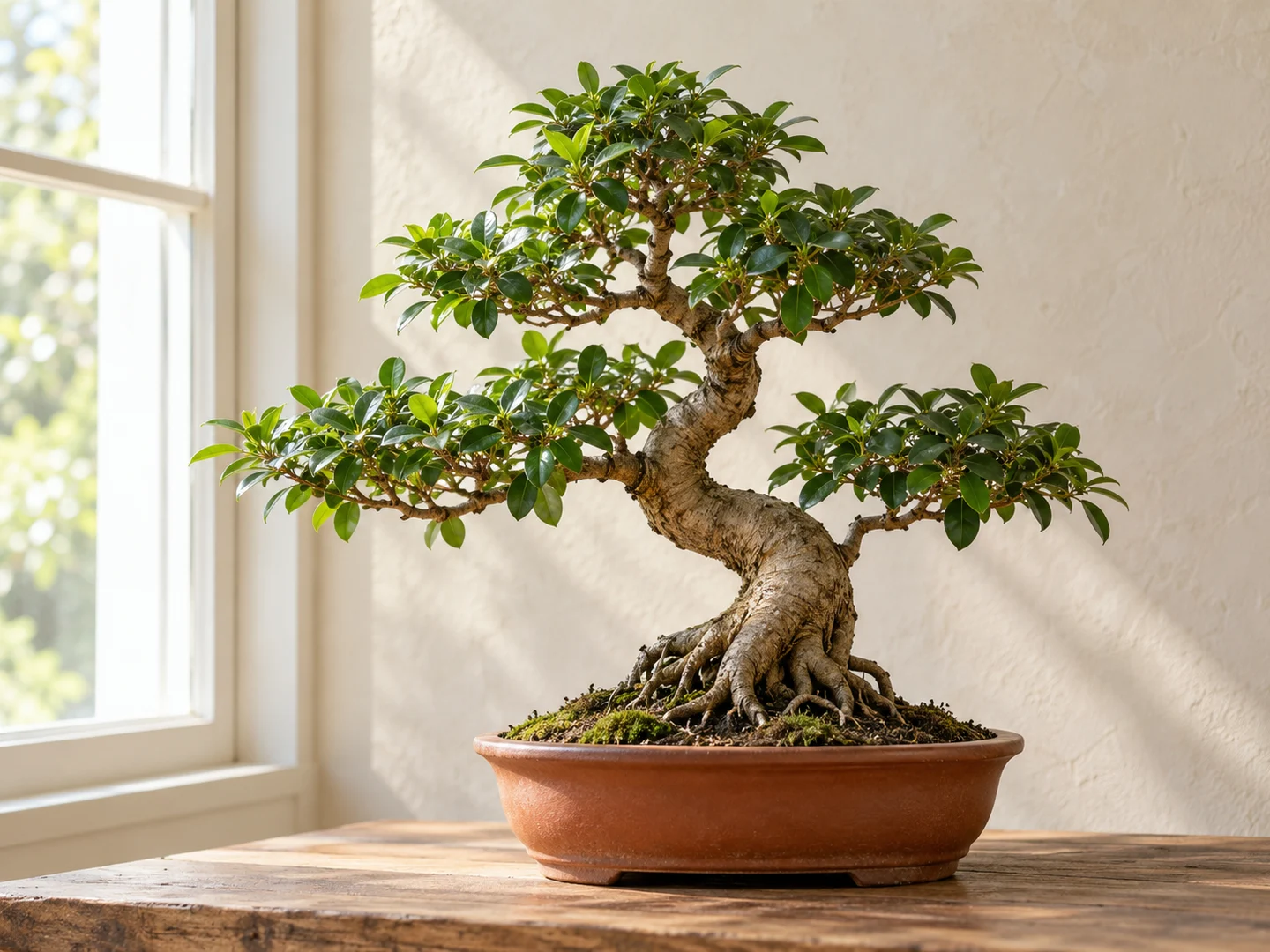
Formal upright uses a relatively straight trunk with a stable vertical feeling. Informal upright introduces movement while keeping the overall balance above the base. In both, trunk taper, branch placement and the root base help create scale.
Choose the direction already supported by the tree. Forcing a curved old trunk to imitate a straight one can be both unconvincing and risky.
02
Slanting and windswept
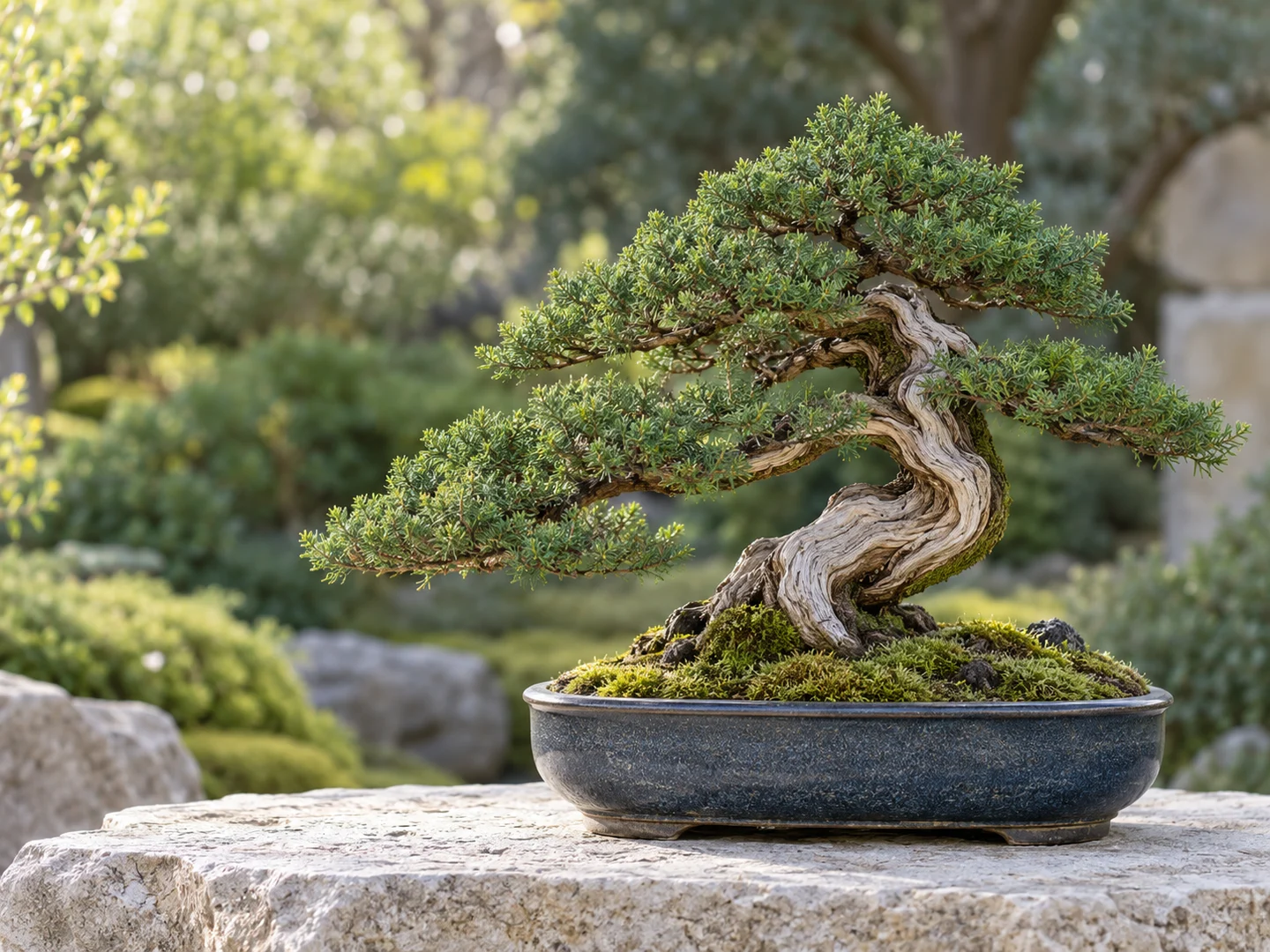
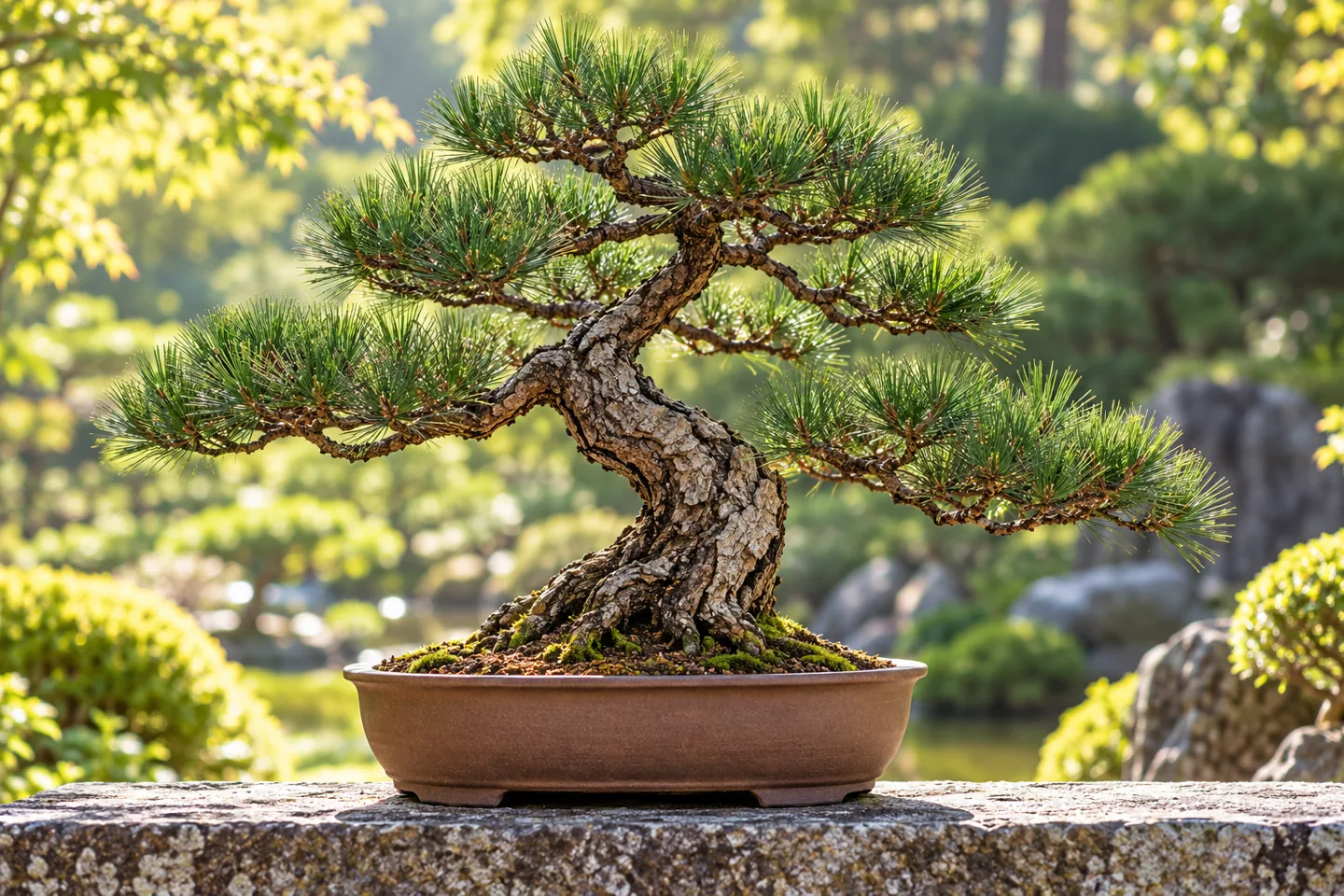
A slanting tree leans while the root base and branching create a sense of balance. Windswept styling suggests growth shaped by persistent exposure, but it still requires healthy foliage and a believable structure.
Simply wiring every branch in one direction does not automatically create a convincing wind story. Study how real trees retain growth around protected areas.
03
Cascade and semi-cascade
Cascade forms extend below the container’s base, while semi-cascade designs suggest a descending line without the same depth. Pot height, stability and light distribution matter alongside the silhouette.
Keep the lower growth healthy and account for the weight and leverage of the design. A tall pot should support practical drainage and safe handling, not just a dramatic photograph.
04
Broom and literati
Broom-style trees can suggest a rounded network of branching rising from a trunk. Literati designs often emphasise a sparse canopy and expressive trunk line. Both depend on proportion and the growth habit of the subject.
A sparse design is not an excuse to leave a weak tree with too little foliage. Health and visual restraint need to work together.
05
Forest and group plantings
A group can suggest depth through spacing, trunk sizes and varied positions. Compatible species and care needs make management more practical. Several trees in one shallow container share a root environment that needs careful attention.
Plan access for watering and maintenance before assembling the composition. Mixed species with conflicting moisture or seasonal needs can make a beautiful idea difficult to sustain.
06
Let development take time
You do not need to assign a style before learning how a new tree grows. Photograph several front possibilities and observe natural branching. Gradual decisions often reveal a stronger design than an immediate heavy intervention.
Use the pruning guide and wiring guide to understand the tools, then choose work that the tree can support.