01
Check the medium before reaching for the can
Touch the substrate beneath any moss or top dressing. Where the texture makes finger checks difficult, a plain wooden chopstick can help you compare moisture deeper in the pot. Lift the pot carefully to learn its change in weight. Use these observations together rather than trusting one indicator.
An inexpensive probe pushed into coarse particles can give misleading readings if it is not making reliable contact. Whatever tool you use, compare its result with the condition of the tree and medium.
02
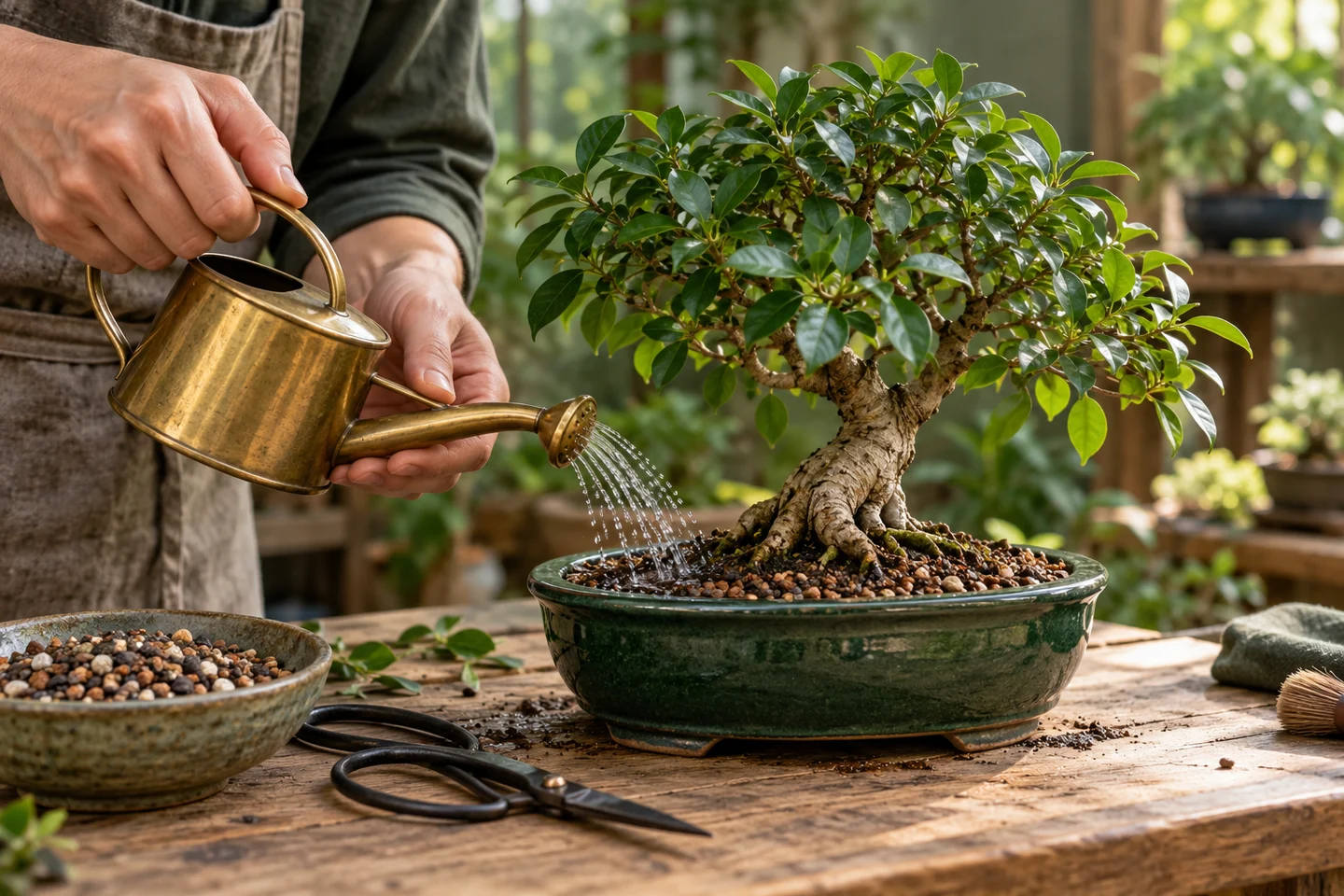
Water slowly across the whole surface
Use a gentle rose or stream and pass evenly over the substrate. Allow water to soak in, then repeat if needed so that the full root ball is moistened. Water leaving the drainage holes is useful evidence, but a fast stream running through one channel may leave other areas dry.
Let the pot drain and empty a water-filled saucer or outer container. Leaves can be wet while roots remain dry, so do not substitute canopy spraying for watering the medium.
03
Understand why the interval changes
Warmth, sun, wind, leaf area, pot depth, roots and particle size all affect drying. A small outdoor pot in summer may need much more attention than the same pot in cool still weather. Indoor heating and seasonal changes in light can also alter demand.
Keep the check frequent enough for your fastest-drying conditions. Do not use someone else’s daily schedule as a permanent rule for your tree.
04
Investigate water that runs off
Very dry or compacted material may repel water or shed it down the pot edge. Slow repeat passes can help you see whether the root ball is actually absorbing moisture. A tree that repeatedly resists wetting needs a review of its substrate and root condition.
Immersion can sometimes rewet a dry root ball, but it is not a default daily method. Do not use prolonged standing water to disguise a drainage problem, and avoid spreading pests or pathogens through shared soaking water.
05
Read under-watering and over-wetting in context
Wilted or yellowing leaves can have more than one cause. A dry, lightweight pot supports a different diagnosis from a cold, heavy pot that has remained saturated. Inspect the root zone and recent care before adding water automatically.
If roots are damaged, a wet medium does not guarantee that the tree can take up water. Correct the cause and seek experienced help when the tree is valuable or decline is rapid.
06
Choose water with the species in mind
Clean rainwater can be useful, particularly for acid-loving plants and where tap water is mineral rich. For many trees, suitable tap water is workable. Monitor deposits, drainage and plant response rather than assuming a branded water additive is required.
Do not pour boiling, freezing or heavily contaminated water into a bonsai pot. If water quality is a recurring problem, use measured horticultural advice instead of improvising household chemical treatments.