01
Keep juniper outdoors
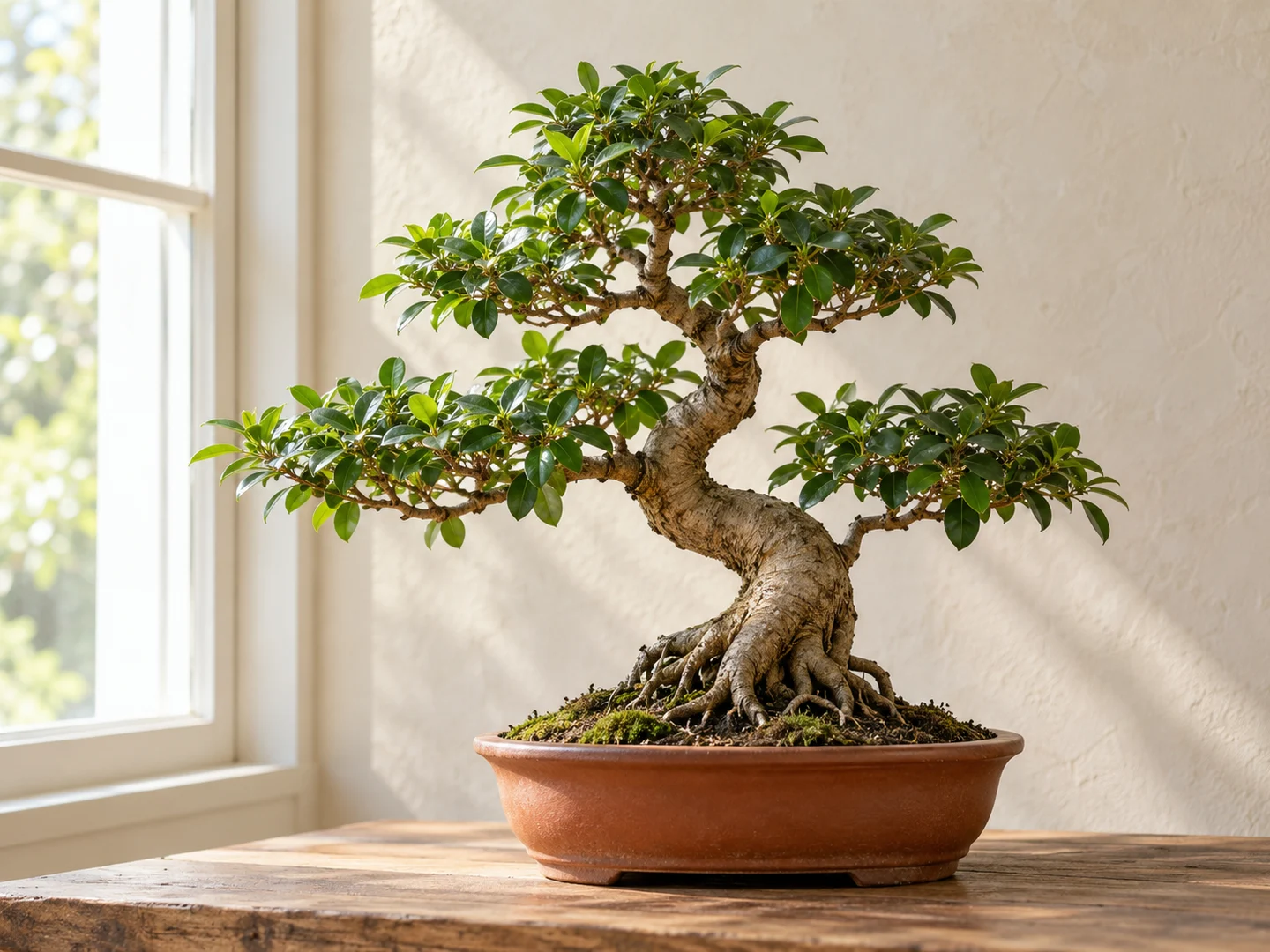
A living-room window does not reproduce an outdoor growing environment. Junipers need open-air light and seasonal conditions. A short display indoors is different from using a room as the permanent growing space.
Choose an outdoor position with good light and air movement, while accounting for drying wind and the exposure of a small pot. A tree recently kept in shade should be introduced gradually to stronger sun.
02
Inspect moisture beneath the foliage
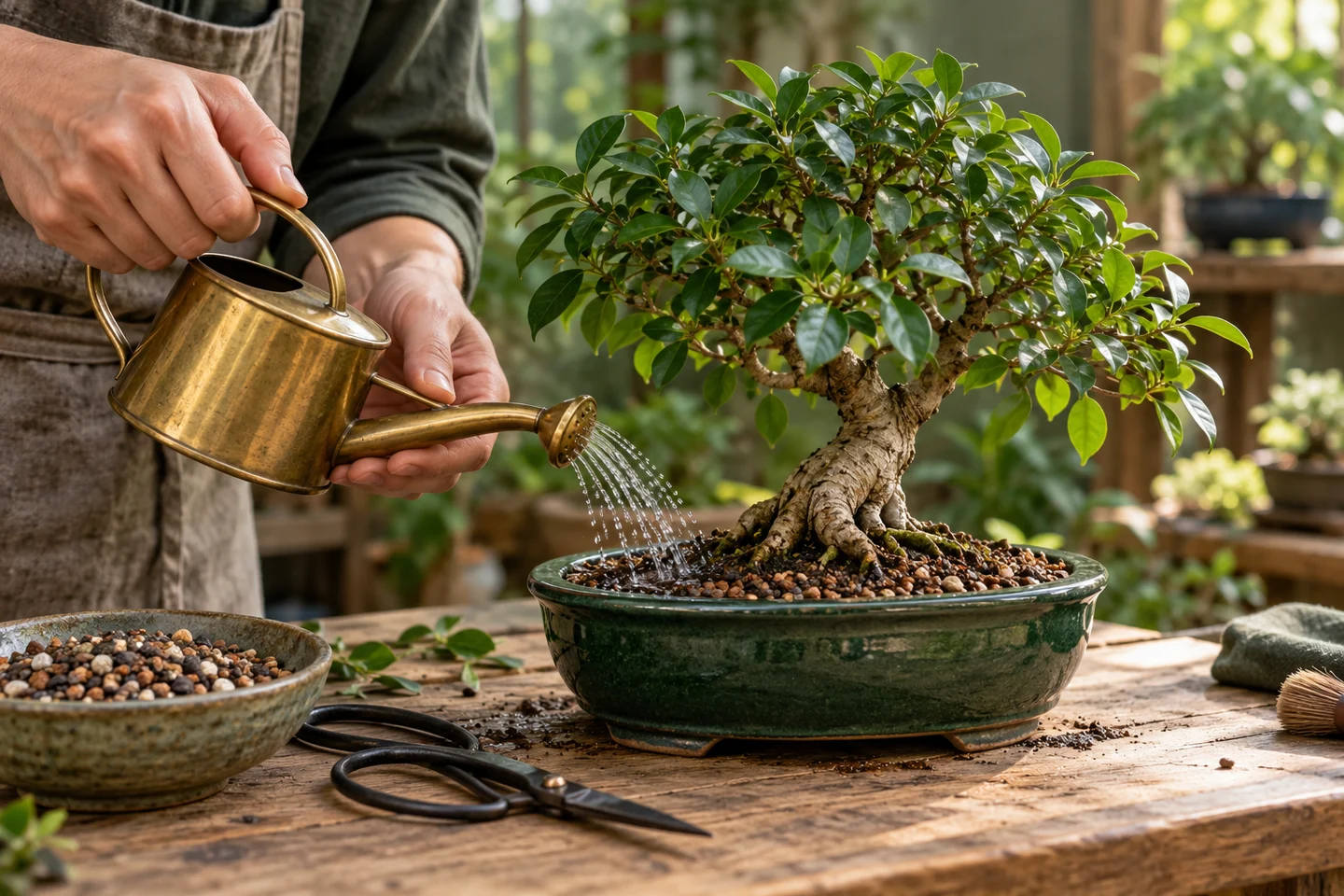
Dense foliage can shelter the pot from rain, so a wet canopy does not prove that the root ball is watered. Check the growing medium and water the entire root zone when needed. Allow runoff to escape freely.
Do not leave the pot in a water-filled tray. Equally, avoid letting a small root ball become completely dry because the plant is described as drought tolerant. A garden shrub in the ground and a bonsai in a shallow container have different reserves.
03
Understand scale and needle foliage
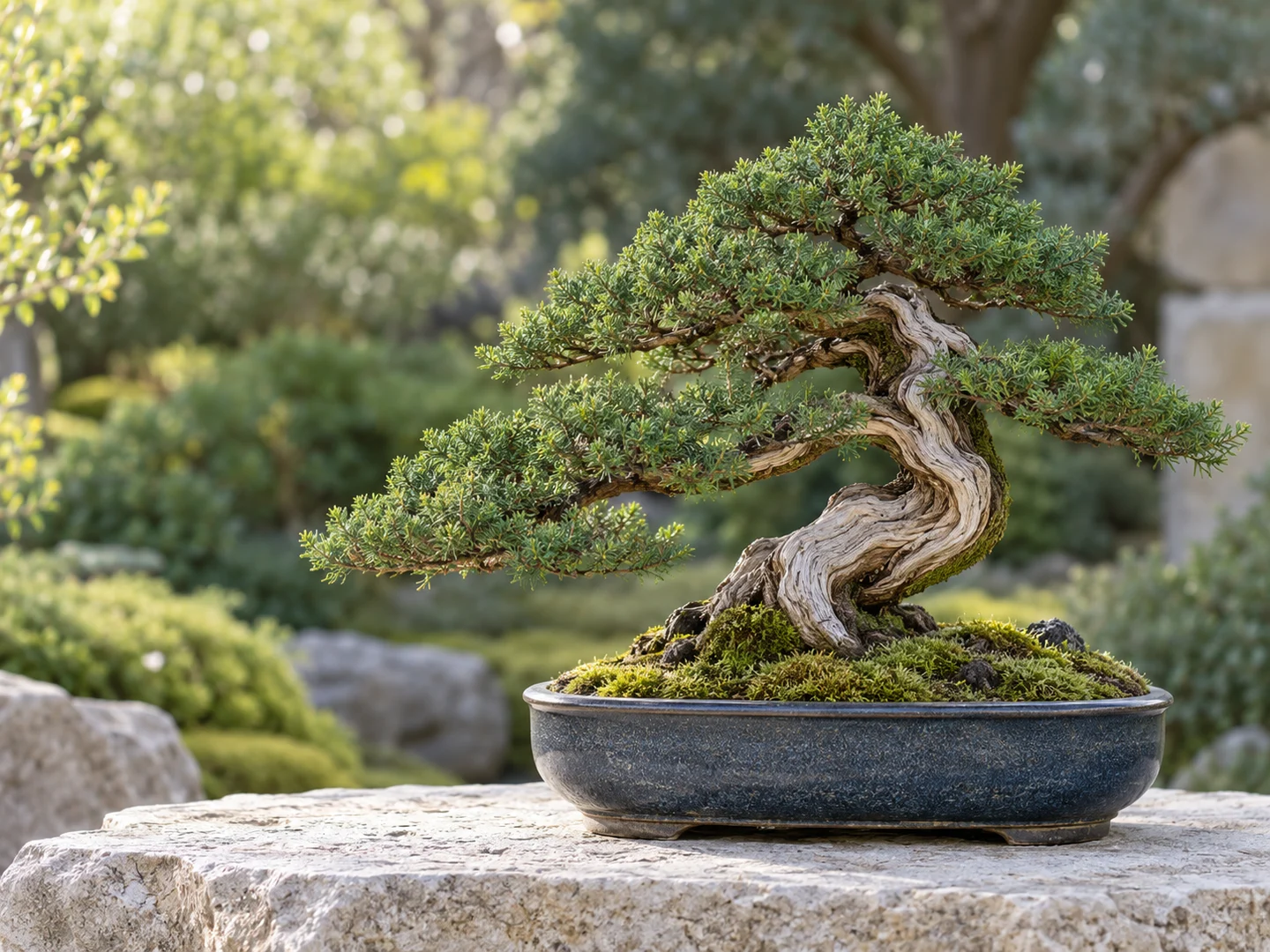
Different junipers carry different foliage, and some can produce juvenile needle growth as well as scale-like growth. Identification is more reliable when it uses the plant label, branching and foliage together. Do not diagnose a problem from one close-up photograph alone.
A small amount of ageing interior foliage can differ from browning shoot tips or a whole declining branch. Record where the colour change starts and compare it with recent care and weather.
04
Preserve healthy green growth when pruning
Plan cuts around living foliage and the species’ growth habit. Do not strip every tip or cut a branch back to bare old wood expecting the same response as a ficus. Retain enough healthy growth to support recovery.
Separate maintenance from major styling. Heavy foliage removal, root work and aggressive bending are each stresses; combining them without a recovery plan can leave a tree with very little margin for error.
05
Plan repotting and winter protection by species
Root work is not an annual obligation. Inspect the substrate, drainage and root development, then choose a species-appropriate time. Avoid removing all of a conifer’s roots and old medium simply to make a clean-looking root ball.
Outdoor winter protection is about the roots, wind and local extremes. A sheltered outdoor arrangement or suitable unheated protection may be appropriate. A heated room is not the default winter shelter for a temperate juniper.
06
Treat widespread browning as a warning
Juniper foliage may show damage after the original stress occurred. If an entire tree becomes brittle and brown, spraying it green with water will not restore dead tissue. Check living growth, drainage and the recent history, and seek a local grower’s assessment for a valuable tree.
Inspect for pests and disease, but do not apply a pesticide merely because needles are brown. Identify a target and follow the product label where treatment is justified.