01
Identify the pine before choosing a technique
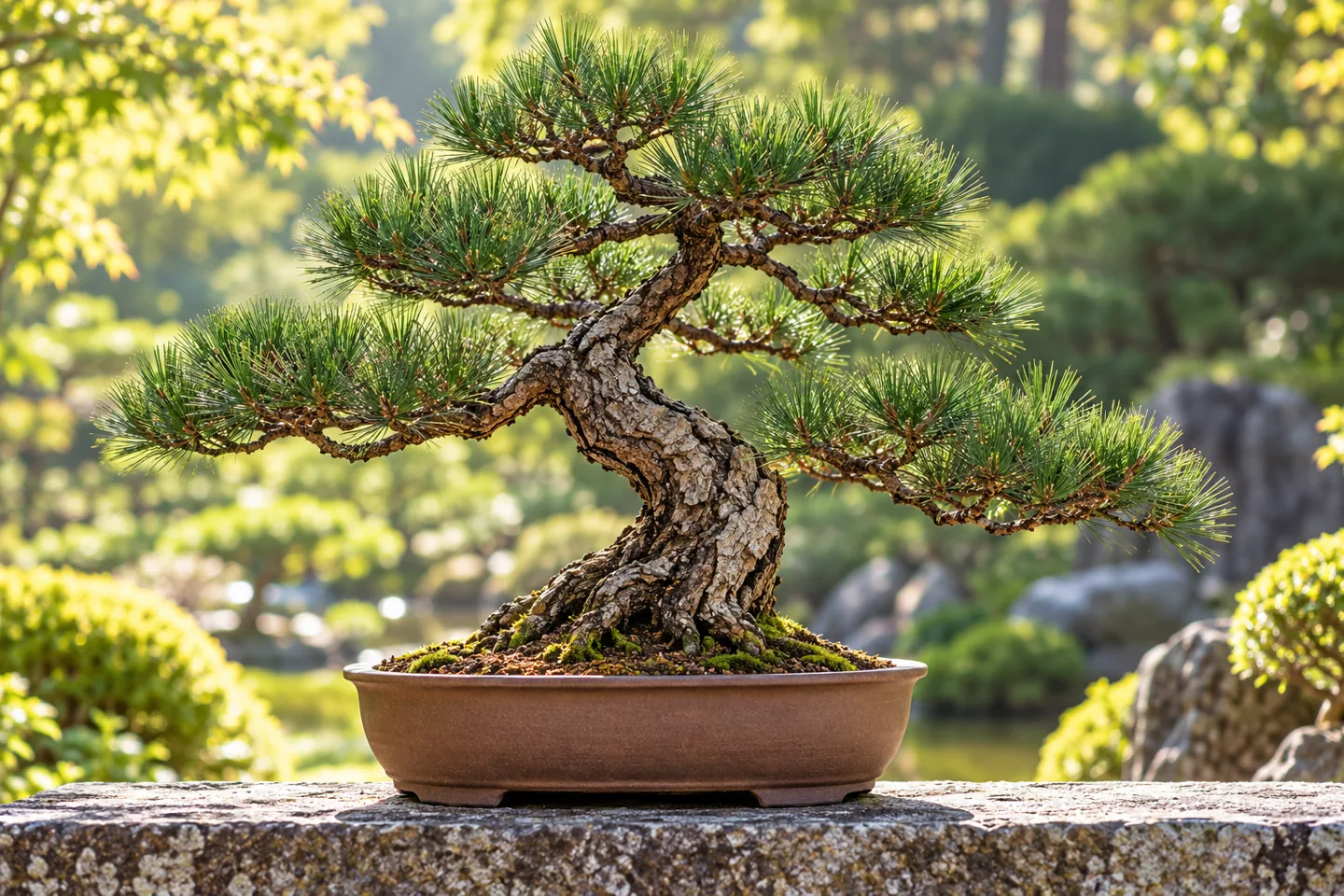
Japanese black pine, Japanese white pine, Scots pine and other pine species do not share an identical growth pattern. Advice about removing candles from one species can damage another. Find the botanical name and, where relevant, the grafting history.
Use needle bundles, bud formation and the nursery record as clues, but seek confirmation if the identification is uncertain. “Pine bonsai” on a generic retail label is not enough information for advanced work.
02
Provide outdoor light and seasonal conditions
Grow pine bonsai outdoors with light appropriate to the species. A room that feels bright to people does not supply the same environment. Keep the pot stable and account for exposure to drying wind.
If the tree has been shaded or protected, acclimatise it before stronger exposure. A weak tree does not benefit from sudden environmental extremes simply because pines are associated with sunny sites.
03
Balance moisture and aeration
Water when the root zone needs it, wet the medium evenly and allow drainage. Avoid repeatedly saturating a pot that remains wet, and do not let a shallow container dry completely because a landscape pine is considered drought tolerant.
An open substrate is useful only when you can manage the resulting drying rate. Particle choice and pot depth should fit both the tree and your ability to check it.
04
Keep candle work species specific
Candles are the extending new shoots. Whether they should be shortened, left alone or removed depends on species, vigour, climate and the development stage of the tree. Do not treat decandling as a universal pine maintenance task.
A beginner can first learn bud strength, needle age and branch balance without performing a major growth intervention. Maintain records and seek specialist advice before cutting back a valuable or weak pine.
05
Preserve living foliage and established roots
Pines generally should not be cut back indiscriminately into bare wood. Keep useful needles and buds when planning branches. Old needles may age naturally, but widespread loss of current growth requires investigation.
Repotting also calls for restraint. Avoid bare-rooting the whole tree or removing a large portion of the roots by default. Choose timing and the extent of work for the particular species and condition.
06
Plan winter and recovery before styling
Container roots are more exposed than roots in the ground. Provide protection suited to your winter conditions while preserving outdoor seasonal rest. A warm living room is not the standard solution.
After root work or major styling, give the tree an appropriate stable recovery period. Do not stack several demanding interventions merely to complete a design quickly. Healthy future growth is the most useful test of a successful operation.