01
Identify the small serrated leaves
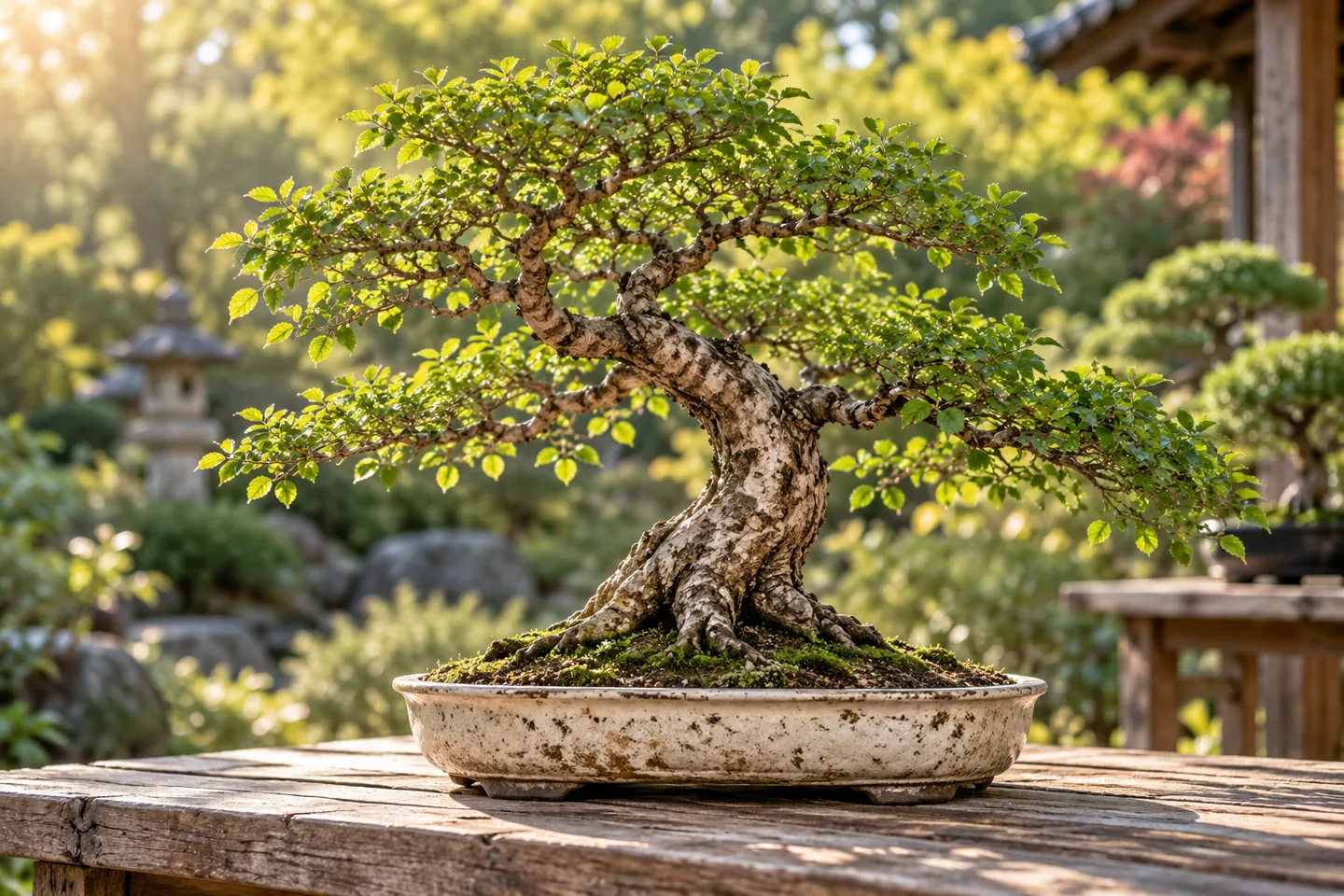
Chinese elm commonly has small, alternating, toothed leaves and develops attractive mottled bark with maturity. Compare leaf arrangement, leaf edges and the plant label together. Similar retail bonsai can be mislabelled, so the common name alone is a starting point.
Keep a record of the botanical name, purchase date and previous growing position. That history is particularly useful when deciding how to manage the first winter.
02
Choose a consistent growing approach
An outdoor position can provide strong light and seasonal development where the climate and acclimatisation allow. Trees raised under warm protection should not be placed abruptly into freezing weather. A warm-grown elm and an acclimatised outdoor elm should not be treated as interchangeable.
If kept indoors temporarily, provide very good light and monitor growth. Do not repeatedly shuttle it between a heated room and cold outdoor conditions. Ask a knowledgeable nursery or local grower to help plan a gradual transition.
03
Watch water use during leafy growth
A full canopy can use water quickly in warm weather. Check the medium and water thoroughly when the root ball needs it. Rain on the leaves does not guarantee that the entire pot has become moist.
If leaves are lost seasonally, reassess the rate of drying. Continuing the same watering amount and frequency after the canopy changes can leave the root zone wetter than intended.
04
Build fine branching with selective trimming
Let a healthy shoot extend, then trim with the direction of the remaining bud in mind. Remove competing shoots gradually and preserve useful internal growth. A neat outline should not come at the expense of an empty branch framework.
Young trees often need growth to develop the trunk before detailed refinement. Decide whether the tree is in development or display refinement before restricting every new shoot.
05
Repot after inspecting the roots
Slower drainage, circling roots and a root ball that has filled its container are clues to investigate. Use a species-appropriate timing window and a medium suited to your watering conditions. Root work should support health rather than follow an arbitrary yearly ritual.
Secure the tree so that new roots are not repeatedly disturbed by movement. Give it a stable recovery position and avoid combining substantial root pruning with a major redesign.
06
Distinguish leaf drop from progressive decline
Chinese elm may lose some or all foliage with seasonal change, depending on conditions. Leaf loss after a sudden move, a dry episode or persistent saturation needs a different response. Look for healthy buds, living twigs and the tree’s recent history.
Check for insects, webbing and sticky residue. Address a confirmed problem rather than treating normal dormancy as a disease or treating every yellow leaf as a fertilizer deficiency.