01
Identify the azalea group
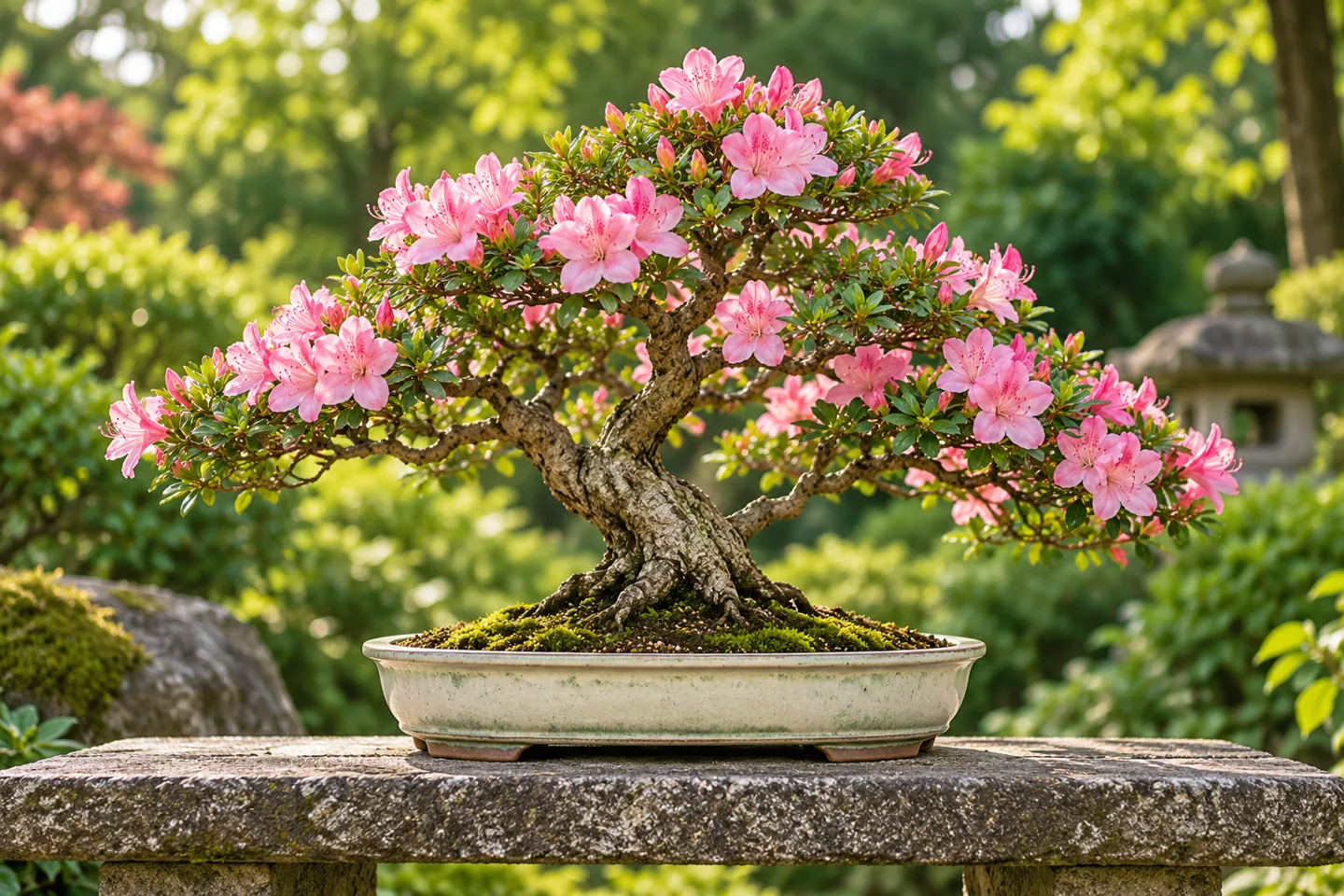
Satsuki azaleas, often associated with Rhododendron indicum and related cultivars, are common bonsai subjects. Other azaleas can have different flowering and hardiness characteristics. Obtain a cultivar or botanical name wherever possible.
A flowering houseplant sold as a gift is not automatically equivalent to an outdoor Satsuki bonsai. Check the plant’s identity and production history before changing its growing conditions.
02
Use an acid-suited root environment
Azaleas prefer acidic growing conditions. A substrate intended for acid-loving plants, with appropriate drainage and moisture retention, is more useful than a generic recipe chosen for every tree in a collection. Kanuma is one material used in azalea bonsai culture, but particle size, breakdown and local watering conditions still matter.
Consider water quality if mineral-rich water is used regularly. Rainwater can be useful where available and clean. Avoid trying to correct water chemistry by adding household acids without a measured horticultural plan.
03
Protect fine roots from drying and saturation
Fine roots need moisture as well as oxygen. Check the growing medium carefully, particularly in warm weather and during flowering. Water thoroughly when required and allow excess to drain.
A dense canopy and flowers can hide the surface of the pot. Make a habit of checking the actual medium instead of assuming that a fresh-looking flower means the roots are fine.
04
Choose a sheltered bright position
Good light supports growth and flower-bud development, while strong drying wind and extreme heat can create stress in a shallow pot. Adjust exposure to the cultivar and local conditions.
Keep the tree outside where suitable and provide protection appropriate to its hardiness. Flowering display indoors, if used briefly, should not become the permanent care arrangement for an outdoor azalea.
05
Plan pruning around flowering
Know whether a cut will remove developing flower buds. Post-flowering work is common in azalea practice, but the exact plan should reflect the cultivar, tree strength and growing season. Remove spent flowers carefully and avoid stripping weak branches.
Do not prune every shoot simply because flowering has finished. Consider which branches need development and which already have the shape you want. Strong growth and a balanced structure matter beyond the next display.
06
Repot gently and seek help for major root work
Fine, fibrous roots require careful handling. Prepare a suitable pot and medium, choose an appropriate timing window and avoid allowing exposed roots to dry. Major root reduction is best learned with experienced guidance.
If a tree becomes weak after flowering, inspect the root environment, water and placement before feeding heavily. Fertilizer is a supplement for a functioning plant, not a cure for damaged roots.