- Apex
- The uppermost part of the tree’s design; its position affects balance and the apparent direction of growth.
- Back-budding
- New growth emerging farther back on a branch or trunk. The ability to do this varies by species and condition.
- Bonsai
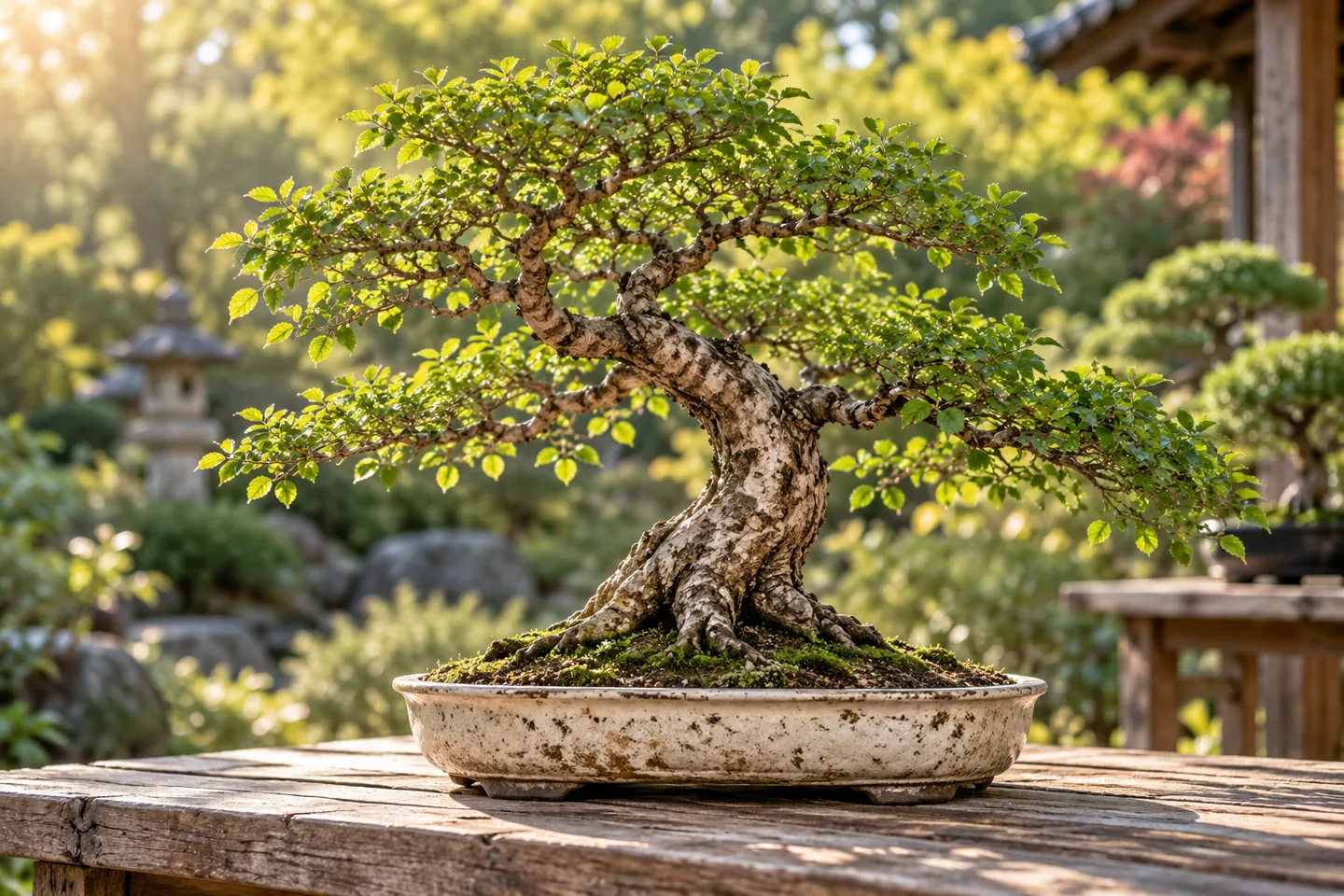
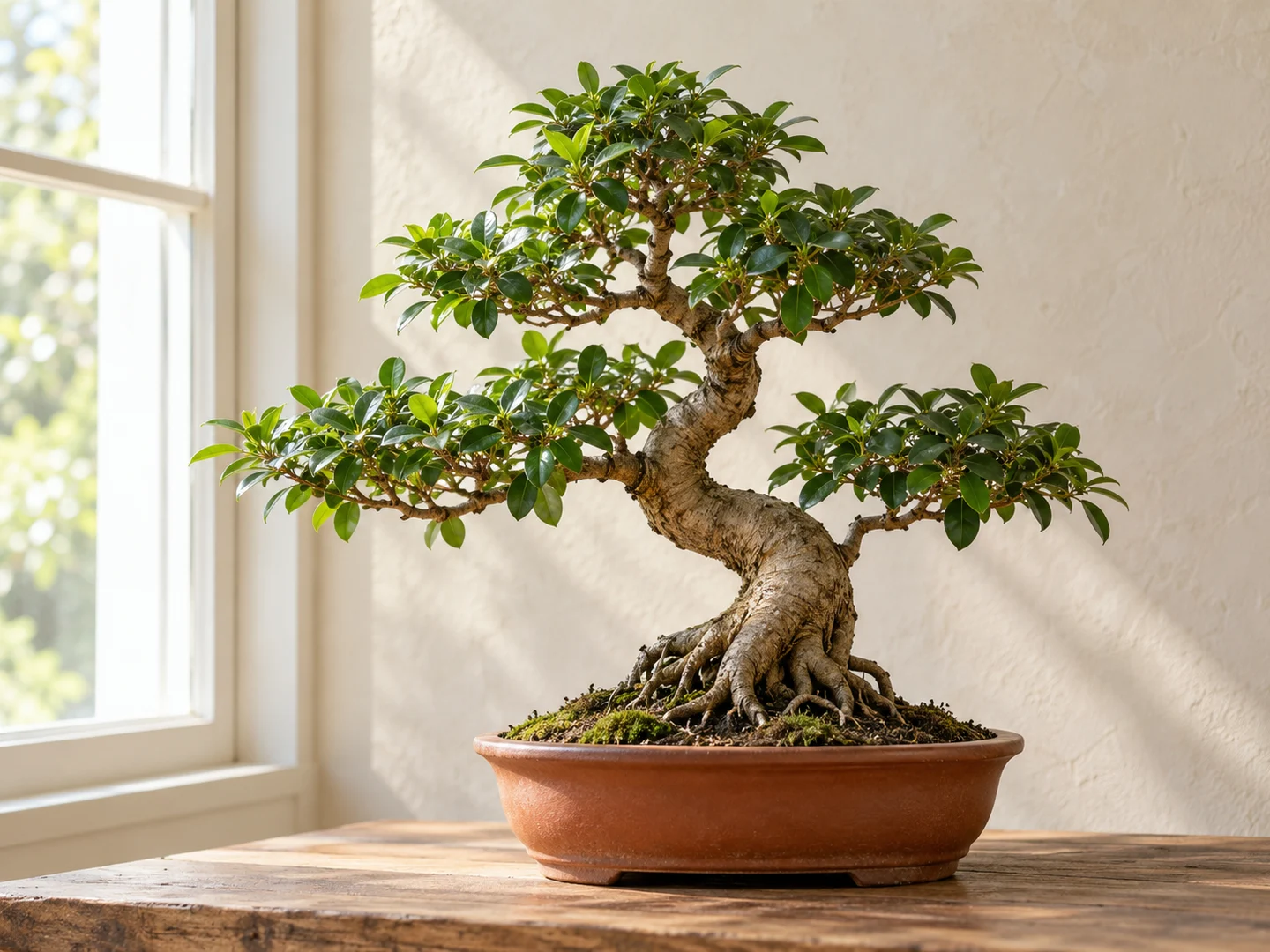
- The practice of cultivating and developing a tree or shrub in a container as a scaled tree composition.
- Candle
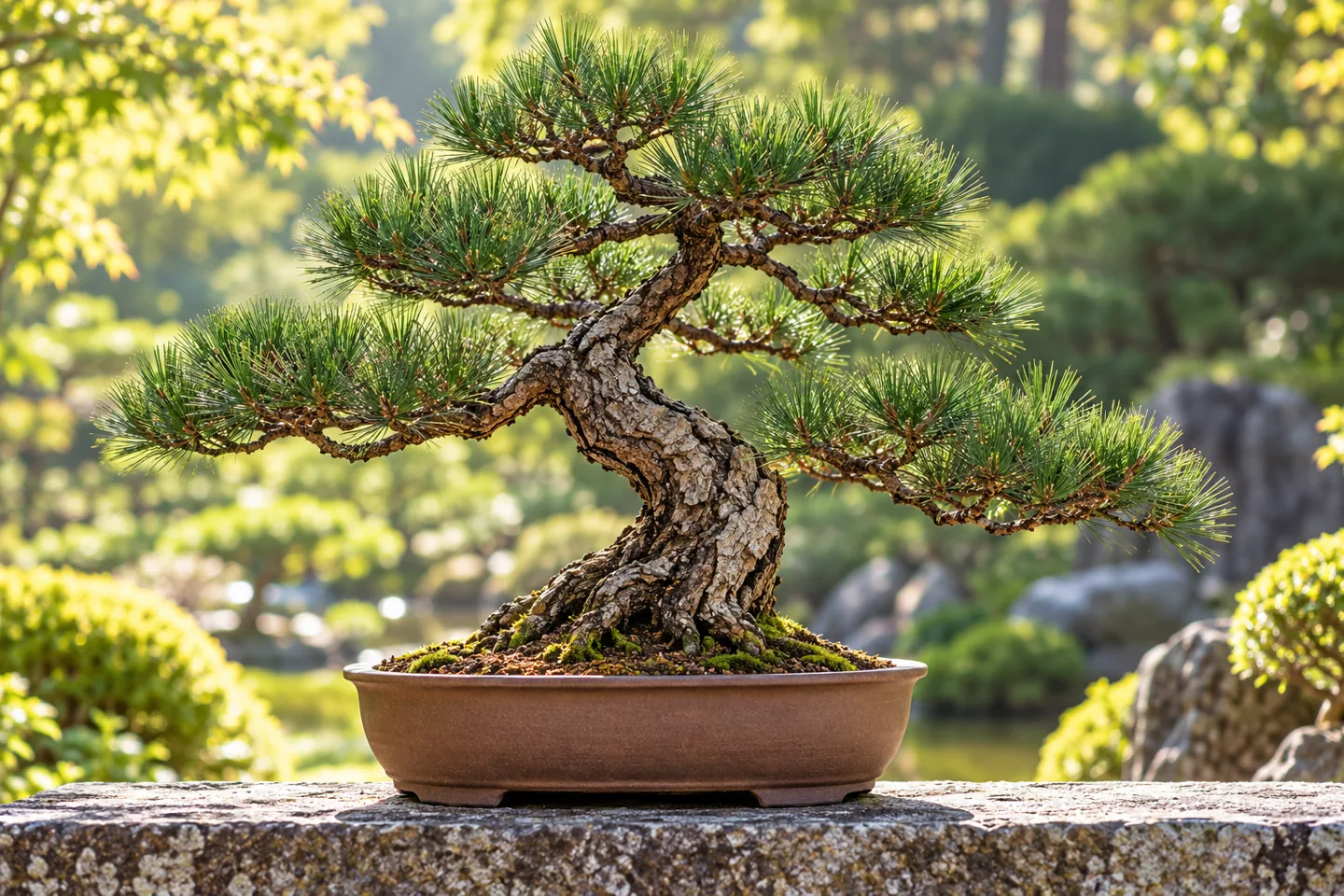
- An extending new shoot on a pine. Appropriate candle work depends on the pine species and growth cycle.
- Clip and grow
- Developing direction and branching through selective pruning followed by new growth.
- Deciduous
- A plant that loses its leaves seasonally. Normal leaf fall must be distinguished from stress-related loss.
- Dormancy
- A seasonal rest stage in which visible growth slows or stops; living roots still need appropriate conditions.
- Evergreen
- A plant that retains foliage across seasons, although individual older leaves or needles still age and fall.
- Internode
- The section of a stem between two nodes. Its length affects the visual spacing of foliage and branches.
- Jin
- A deliberately retained or created dead branch used as a design feature; making one is a specialist styling decision.
- Nebari
- The visible surface-root base around the trunk, contributing stability and the impression of age.
- Node
- A point on a stem where leaves, buds or branches arise.
- Ramification
- The development of progressively finer branching.
- Root flare
- The widening transition from the trunk into the main roots.
- Root pruning
- Selective reduction of roots, normally associated with a planned repot and species-appropriate handling.
- Shari
- A strip of exposed deadwood on a trunk, used in some designs.
- Substrate
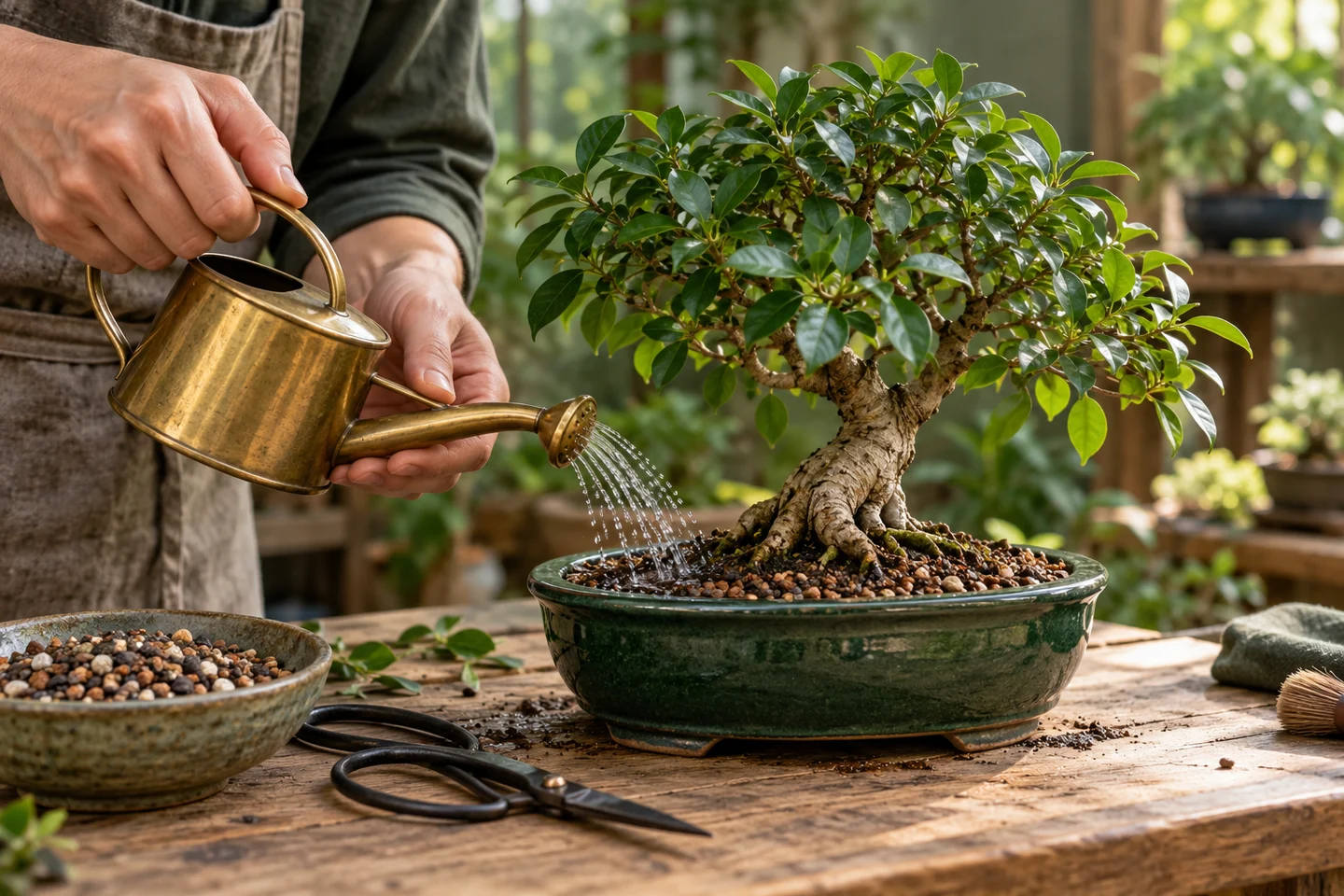
- The growing medium around the roots, which provides support, moisture and air spaces.
- Taper
- A gradual reduction in thickness along the trunk or branch that contributes to the impression of a larger tree.
- Training pot
- A container selected primarily to support development and practical care rather than a final display.
- Wiring
- Using wire temporarily to support and reposition branches, with repeated inspection to protect bark.
No terms match your search.