01
Match the species to the site
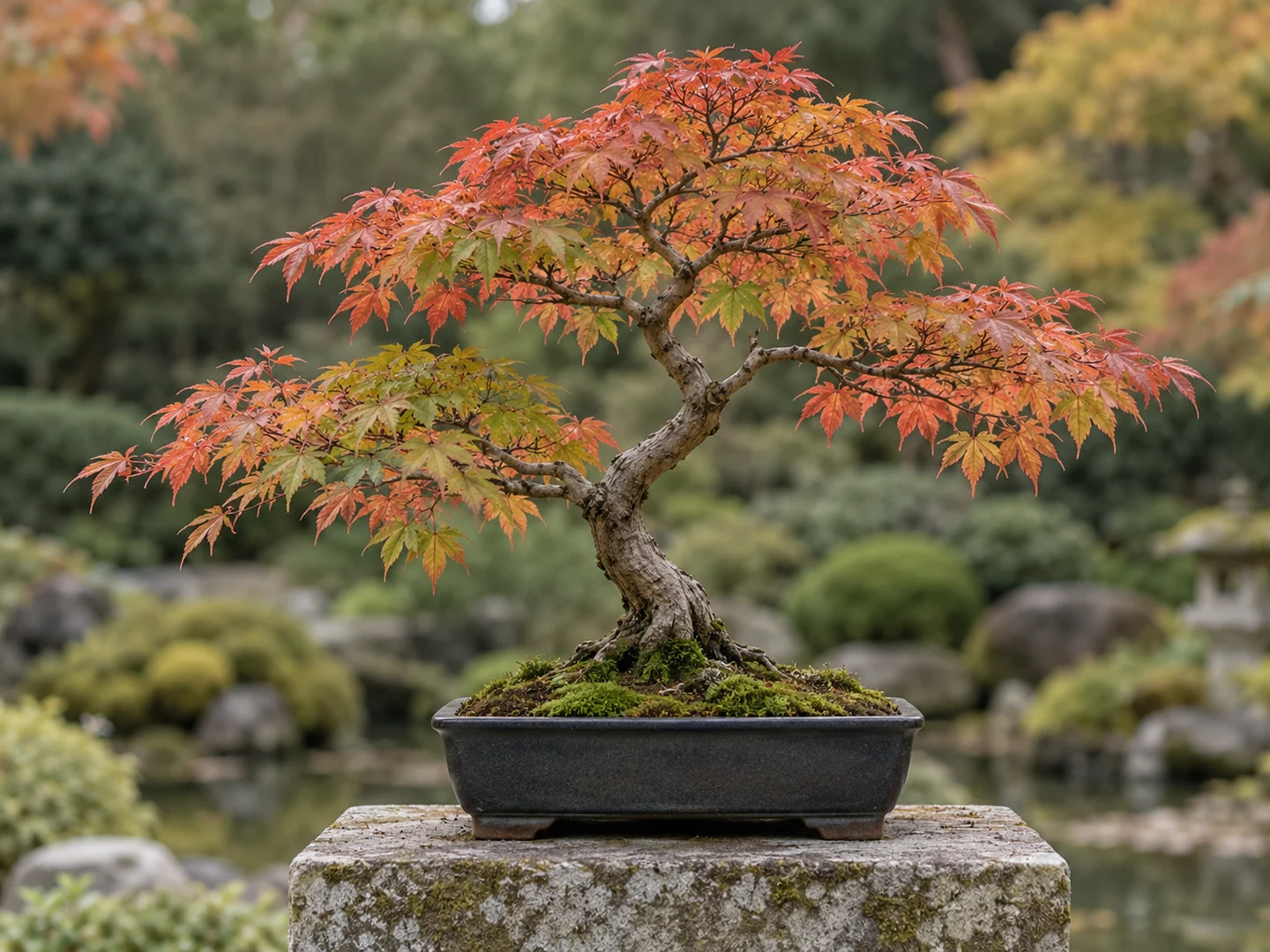
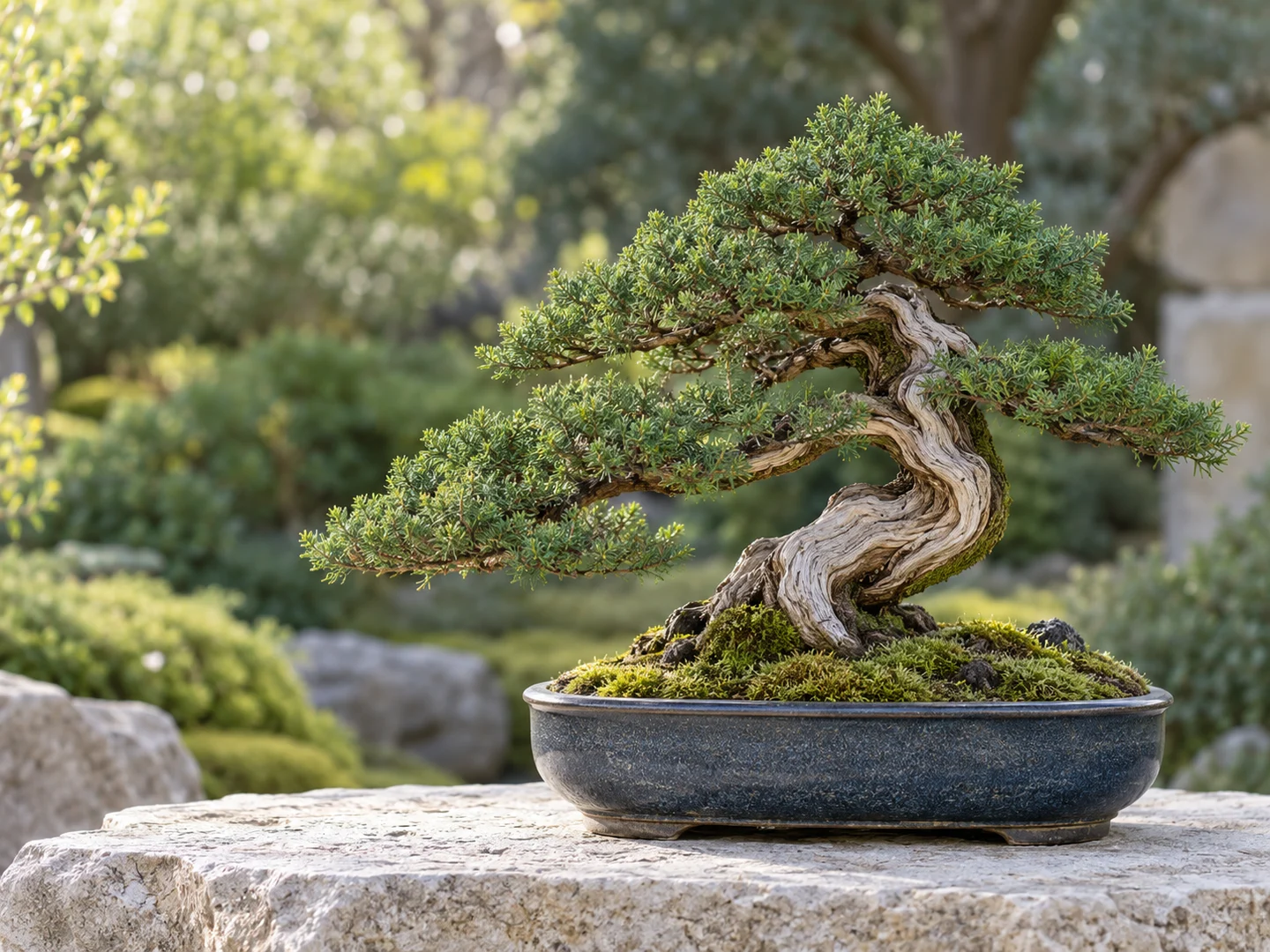
Juniper and many pines enjoy strong outdoor light, while maples and azaleas may need more shelter from heat and drying wind. Chinese elm care depends partly on acclimatisation and growing history. Learn the needs of the actual species, rather than grouping every outdoor bonsai under one routine.
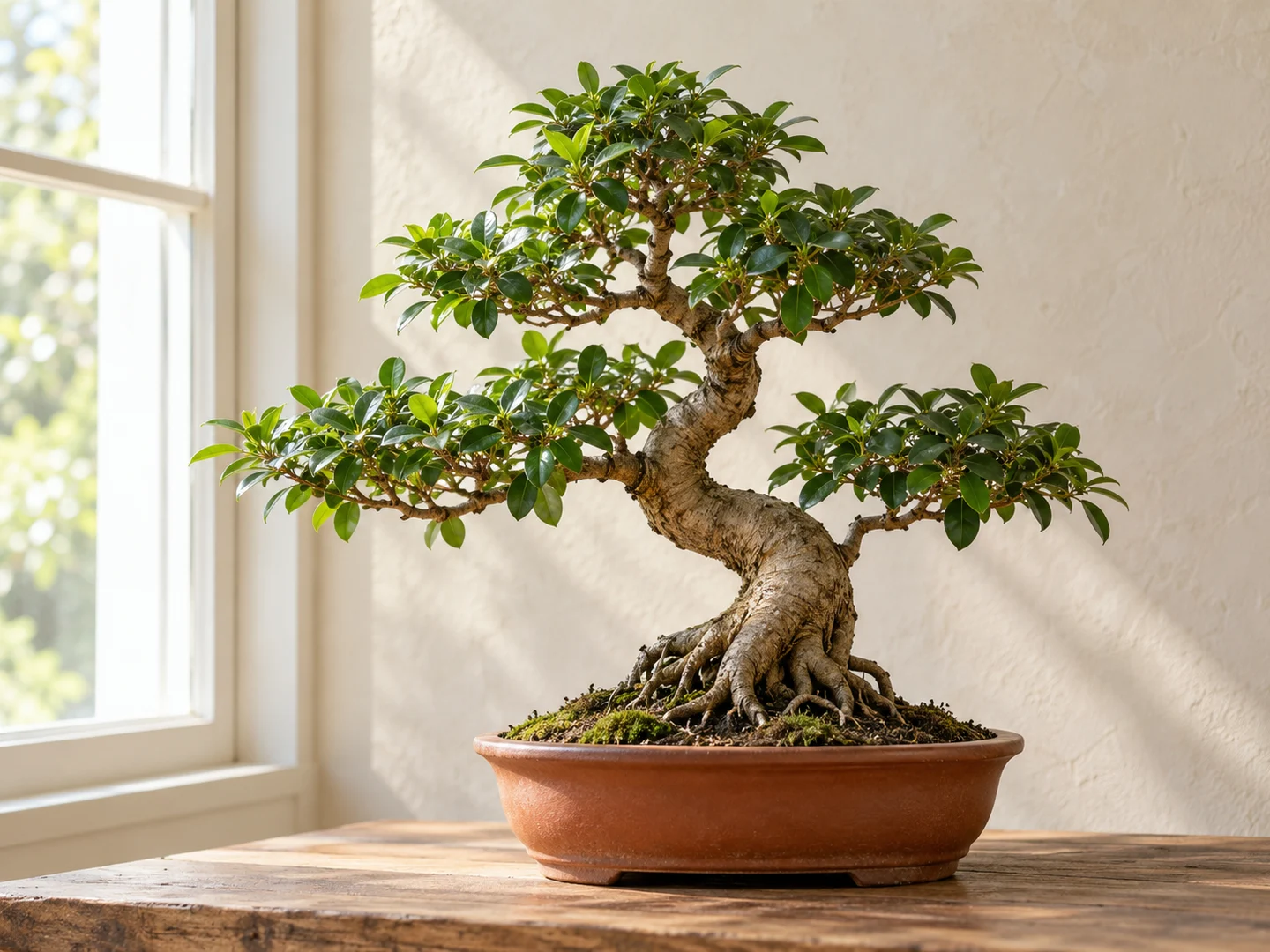
A tree should suit your available light, winter conditions and daily access to water. If you cannot check a very exposed small pot, adjust the position or container before buying a more demanding specimen.
02
Build a stable growing position
Use a level, secure bench or stand that can support wet pots and allows free drainage. Keep trees out of situations where wind, pets or accidental contact can knock them down. Leave space to inspect the back of the canopy and underside of the container.
A bench is practical equipment, not just a display shelf. Access for watering and observation matters more than filling every available space with pots.
03
Do not count rain as an automatic watering
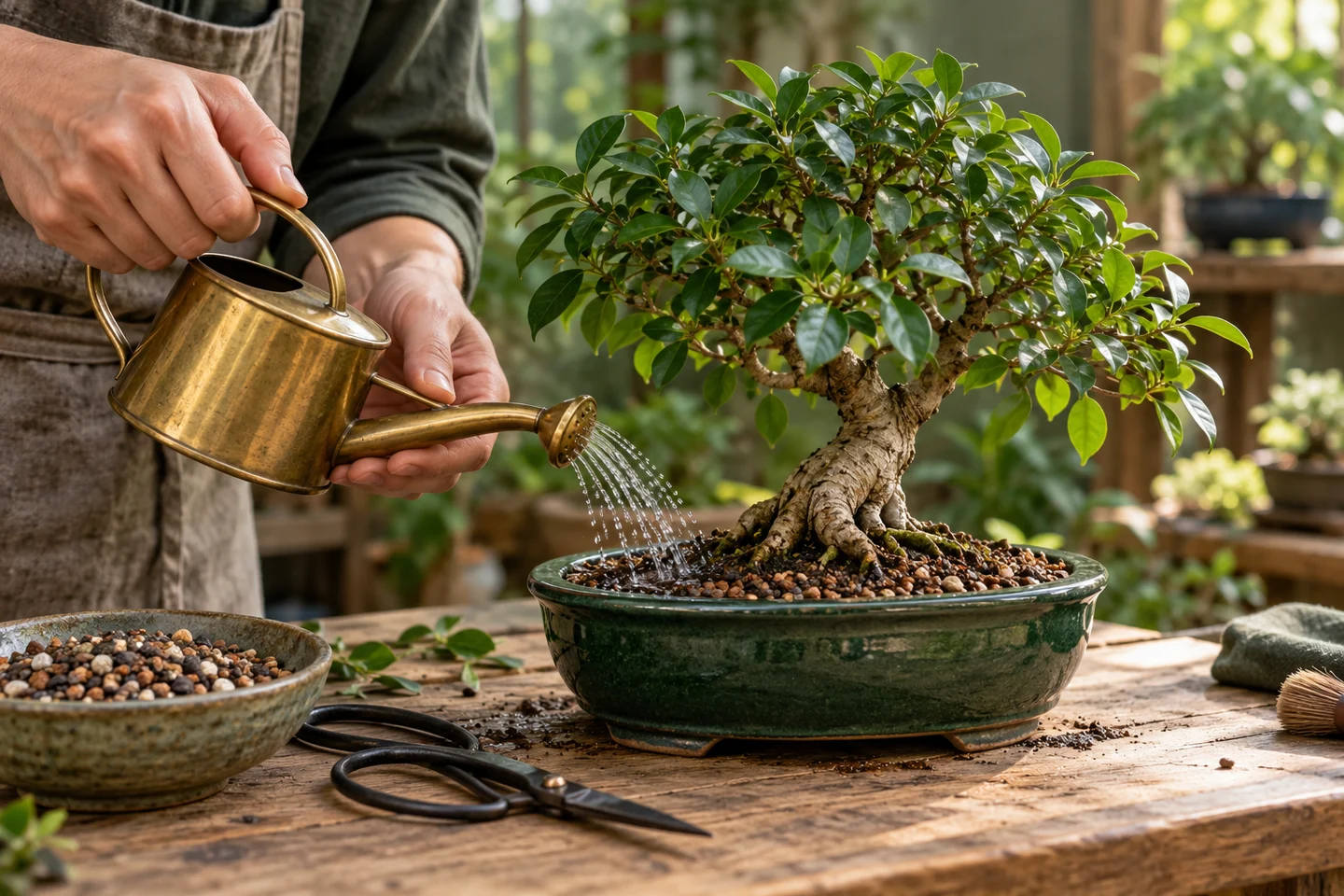
Canopies can deflect light rain away from the root ball. Conversely, prolonged rain can keep a dense medium saturated. Check the actual pot. During warm wind, a shallow container may dry quickly even when the air does not feel especially hot.
If you travel, arrange a reliable care plan and test any watering equipment before relying on it. A change to shade or a tray of standing water is not a universal holiday solution.
04
Plan for roots in winter
Cold tolerance in the ground does not translate directly to an exposed bonsai pot. Roots, repeated freezing, wind and drainage all need consideration. Protection may involve a sheltered location or suitable unheated accommodation, depending on the species and local conditions.
Do not move a dormant temperate tree into a heated room as the default response to frost. Seek local experience when planning the first winter for an unfamiliar species.
05
Let the tree set the work calendar
Bud movement, shoot development, flowering and leaf fall tell you more than a generic monthly checklist. Plan repotting, pruning and wiring around the species and its strength. Keep recovery time between substantial operations.
Use the seasonal care guide as a framework, then consult the individual tree profile. A good schedule is one you can adjust when weather or growth differs from the previous year.